Tuesday, December 14, 2010

Zen And The Art Of Microwaving Martians

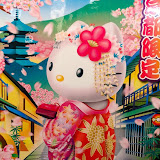
Kyoto pics

A 20-hour flight to the other side of the globe feels like a trip to another planet. If the destination happens to be Japan, then you’ll really feel that you’re on another planet. You may even think that everything is fine, that you’ll manage to get to your hotel without running into something that looks out of this world…until you must face a Japanese ticket machine with more buttons than an airplane cockpit – it’s a visual assault and in your jet-legged state, you get dizzy just trying to find the “English” button which, truth be told, may not exist (survival tip: look at the maze-like chart above the machine, find the fare to your destination, throw the money in and press the button with the fare amount you want). That’s just one example of the cultural shock that is Japan and Kyoto is no exception - Kyoto station, the entry point to the city, is a gigantic 16-storey building that houses not only the train station, but also a 500-room hotel, a theater, two malls, a bus station, a museum and several restaurants. A labyrinthine black hole that you doubt you’ll ever get out of.

Kyoto is arguably the Japanese city that most retains the country’s traditions and I was surprised to see many young women wearing kimonos. For the life of me, I cannot imagine any woman wanting to walk around in wooden flip-flops in a dress so tight that barely lets her walk but they must wonder the same about western feet-mangling stilettos. Kimonos are not the biggest thing in Kyoto, though; green tea is. Japanese meals are served with a cup of green tea and there are several other variants such as green tea latte, green tea smoothie, green tea ice cream, green tea cream puff, chocolate sweets wrapped in green tea flour. I overdosed on green tea and already looked as green as a Martian by the second day.

Kyoto was the capital of Japan for over a thousand years from the 8th to the 19th century. Called Heian-kyō, or Capital of Peace and Tranquility, the town lived up to its name for four centuries and became Japan’s commercial and cultural center. But in the 10th century, the samurai, warriors who fought for the emperor against the tribes of northern Japan, started to form private armies and the ensuing fragmentation of power led to civil wars and internal conflicts. From the late 12th century, the country was ruled by a succession of shōgunates (military dictatorships), with Kyoto remaining the official capital but without any political power.

Kyoto was not bombed in WWII and is therefore the only big city in Japan that retains a large number of pre-war buildings. Among those are Kyoto’s 1600 temples and 400 Shintō shrines that are the city’s main attractions. Their design is meant to give a feeling of peace and tranquility in a setting that usually includes Zen gardens, ponds and paths through hills or groves. It would have been very relaxing if the whole population of Japan hadn’t decided to join me. November is Momiji-gari season (autumn leaf viewing) in Kyoto and no matter which temple or what time of day, there were always throngs of shutter-happy Japanese leaf-peepers of every possible age, and sometimes it took me a very, very, very long time to take a single picture. At times it was very frustrating, but other times I stood there so long that I even stopped thinking; and in a strange way, the temples did what they were supposed to do – they quieted my mind.

The city was spared in WWII, but one of its traditions suffered greatly – that of the geisha. The word translates as “person of the arts” and earliest geisha were actually men dedicated to dance, music and poetry. The female version of the geisha took hold in the 1760s/1770s and like the men, they were artists and erudite companions. During WWII, most women had to work for Japan, and geisha numbers dwindled dramatically – while there were over 80,000 in the 1920s, it is estimated that there are less than 2,000 today. Furthermore, prostitutes began calling themselves “geisha girls” to occupying soldiers, leading to the misconception by many Westerners that geisha is just the Japanese word for prostitute.

Nowadays, the geisha tradition still exists in the Gion district of Kyoto. They perform in exclusive teahouses and restaurants, and only for select wealthy customers – the fee for an evening of entertainment is upwards of $1000. It is impossible to enter a teahouse and spend the evening with geisha without being introduced by an established patron, but geisha performances can be seen at annual festivals or cultural presentations such as the daily ones at Gion Corner.

While a true geisha performance is out of reach for most tourists, there is a modern experience that is as Japanese as they come and very accessible – sleep in a capsule hotel. I was a bit concerned that it might feel like a coffin, but I wouldn’t pass up this quintessential Japanese experience. The pod turned out to feel more like a microwave, it was reasonably comfortable and included a “sleeping ambient system” that dims the lights as you go to sleep and brightens then up gradually as you awake. And as I woke up to brighter and brighter lights, I was actually waiting for my little microwave to beep, signaling that I was well done. The shower hours were also a huge novelty – to 25 a.m. on weekdays and 26 a.m. on weekends. Fantastic! Only the Japanese to miniaturize the day and squeeze more hours into it!

Jokes aside, Japan is a fascinating land, and Kyoto even more so – a sprawling maze where the futuristic and the ancient sometimes blend, sometimes clash, a place that will intrigue you, astound you, that will overwhelm you with its quirkiness but captivate you with its details. And, surprisingly, one that will let you find peace and tranquility amid all the hum.

Thursday, December 9, 2010

War Games With Lil' Kim

S.Korea pics

“…confronted each other hostilely much like southern and northern halves of a partitioned nation”. This could very well have been written about contemporary North and South Korea, but it was actually penned in the early 8th century about the kingdoms of Shilla and Parhae that occupied the Korean peninsula, and were separated by a wall that ran from present-day Pyongyang, the capital of North Korea, in the west to the Sea of Japan in the east. Fast forward to the 21st century, and history repeats itself – the same peninsula cut in half by a Demilitarized Zone or DMZ.

The origins of the DMZ date back to WWII: it was a line drawn at the 38th parallel of Japanese-occupied Korea to mark the areas in which American and Soviet forces would receive Japanese surrender. The US viewed an occupation of Korea as crucial to the postwar stabilization of the Pacific, and set up a three-year military government below the 38th parallel while the Soviets did the same above it. By 1948, two separate republics existed and in mid-1950, the North invaded the South, igniting the Korean War. Three years and two million+ lost lives later, an armistice was reached that restored the old border and created the DMZ, a 2.5-mile wide buffer zone between the two Koreas, nowadays the most heavily militarized border in the world (the irony won’t be lost on anyone) and a major tourist attraction. It should be noted though that a formal peace treaty was never signed.

On the northern side of the DMZ is North Korea, the most isolated country in the world with less than 2,000 Western visitors per year, and where mobile phones and the internet are non-existent. The country is highly militarized, with a minimum 6-year military service for men, and ruled with an iron fist by the Kim dynasty with a vast propaganda machine that promotes a personality cult of the “Supreme Leader”, currently Kim Jong-il, or Lil’ Kim, as I call him. His official biography claims that his birth was foretold by a swallow and marked by the appearance of a double rainbow and a new star in the sky! No wonder Lil’ Kim’s ego is larger than a communist square. And like any other megalomaniac dictator, Lil’ Kim wants perennial power, thus the brinkmanship and nuclearization of the country.

Incidents between the two Koreas are nothing new, but the November 23rd attack on an insignificant South Korean island of some 1,300 inhabitants was one of the most serious recently. And it was not the first this year - in March, North Korea also sank a South Korean naval ship killing 46 soldiers. Many South Koreans think this is enough and support retaliation. The battle of words has started - the new South Korean defense minister said his country will respond with airstrikes if North Korea attacks again and joint US-South Korea military drills took place last week; North Korea warns that these drills could lead to an “all-out war any time”. The stage is set for escalation of hostilities…and one can only hope that Lil’ Kim is not as deranged as he seems to be.

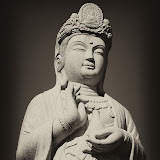
The now divided Korean peninsula was first unified in 668 under the Shilla kingdom with its capital located in Gyeong-ju in the southeastern part of the country. The kingdom had close relations with the Tang dynasty in China and the heavy Chinese influence/alliance lasts to this day and can be seen from religion (Buddhism) to philosophy/ethics (Confucianism) to architecture and trade (China is South Korea’s largest trading partner). Korean historical buildings mirror many that exist in China and tend to follow the same style so unless you’re a history buff, there’s no need to visit lots of them. My favorite was Changdeok Palace in Seoul, not only because it looks recently restored but also because it is one of the largest and doesn’t feel crowded. Morning is the best time to visit as bus tours only hit the palace in the afternoon.

Less palace hopping means that you can do more of what planeloads of Japanese come to Seoul for – shopping. Options abound, including malls that operate from 10:20 am to 5:30 am (!), providing enough hours of retail therapy to cure any emotional malaise. Just don’t forget to bring earplugs lest nonstop insufferable Korean pop music drive you to mass murder. And fear not if you cannot spend hours in a mall – sellers also bring their wares (and voice amplifiers) into subway cars so you can do your shopping while you commute. This is what I call being productive!

But more bizarre than mobile merchants hawking their merchandise inside subway cars was what happened to me on the last day of the trip. On the spur of the moment I decided to visit Bongeunsa Temple in Seoul and as I was admiring the Buddhas, I suddenly bumped into Jónsi, singer of the Icelandic band Sigur Rós, who has spent most of this year touring with one of the best shows I’ve seen recently. The odds of a NY dweller running into an Icelander musician in an Asian city of 10.4 million people are virtually zero so here’s my question - why can’t I be as lucky with lottery numbers?!

Wednesday, July 21, 2010

Eternal Daylight Of My True Paradise

Iceland Summer Pics

Under ordinary circumstances, I’d never go to the same country twice in the same year. But there’s nothing ordinary about Iceland. I knew I’d be back one day…I just didn’t know it’d be so soon. All I can say is this - Iceland is full of surprises, and just like it sneaked into my travel plans earlier this year, it created perfect conditions for a summer trip.

When I left Iceland on March 28th, a small eruption on Fimmvörđuháls was sending cute white plumes up to the skies. It stopped on April 12th, and two days later on April 14th, Eyjafjallajökull decided to show the world what fire and ice can do. Many of my friends told me how lucky I was to have gotten out of Iceland before that, but it’s all a question of perspective: I actually felt very unlucky. And with every blast of ash it blew up in the air, I could picture little Eyjafjallajökull sneering at me with a “See what you’re missing?” Oh, how I wanted to strangle that unspeakable volcano!

Eyjafjallajökull did more than bring air travel to a halt and leave millions stranded; it made some people think that the whole country was blanketed in ash, causing a drop in the number of visitors. Lower demand equal lower prices, and if on one hand my little friend denied me its grand spectacle, it opened the door for my summer return.

Summer in Iceland is relative, though: with temperatures below 60˚F (15˚C), it is colder than winter in my hometown of Rio de Janeiro. When I still lived in Rio, I caught a headline once that named Iceland the country with the highest quality of life in the world, and I remember laughing because I found it unfathomable that a place that would feel like a refrigerator to me could offer any quality of life. But that is the beauty of travel: you learn to see things differently, and Iceland turned out to be like nothing I had envisioned.

Iceland has been called the “land that defies imagining” (National Geographic), the “land where nature always gets the last word” (The Geography of Bliss), a “magical epic land” (Lonely Planet). Iceland is all this, but no matter how much you read about it or how many photos you see, Iceland cannot really be described or depicted, it can only be experienced. No words or pictures will ever be able to capture a place that is fierce yet delicate, compact but seemingly vast, grand in a subtle way.

To me, Iceland is simply the most awe-inspiring country I have ever seen. Iceland is a work in progress, a place that breathes, heaves, gets transformed before your eyes (for instance, the country gained a new mountain in between my visits). Iceland is an experiment of nature, and all this changing and reshaping is contagious: Icelanders have a “let’s try it” attitude, and experiment with sounds, design, art, and can sometimes create truly unique and intriguing things.

And now that I’m back to my “normal” life, I miss Iceland a lot. I miss the endless daylight, the choir of countless birds at sunny midnights, the clean air, the sun that doesn’t burn, the clear streams that reflect the color of the sky. I miss the red traffic lights in Akureyri, almost all of them heart-shaped to remind people to “smile with your heart”. I miss being able to see for miles wherever I look. I miss getting sprayed by waterfalls, watching the weather change numerous times a day, getting awestruck by the scenery at almost every turn. But most of all, I miss a place that gives me the feeling that there are several open roads, both physical and metaphorical, ahead of me to be explored, a place that lifts the spirit, and makes me feel simply extraordinary.

Saturday, July 10, 2010

Is Paradise Really There?

Bahamas Pics

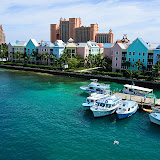
The Bahamas comprises 29 islands, 661 cays and 2,387 islets, but its most well known piece of real estate is Paradise Island, home to the mega-resort Atlantis. What many don’t know is that the isle was once called Hog Island and used mostly for farming until it was purchased in 1960 by Huntington Hartford, the A&P supermarket heir, who gave the island its current name.

Paradise Island is only 4 miles (6.4 km) long and 0.5 miles (0.8 km) wide, and is dominated by Atlantis, the sprawling resort that is the most expensive place to stay in the Bahamas, occupies 97 acres, offers 2300 rooms in three different towers, and contains 20 million gallons of lagoons, pools, waterfalls and aquariums. Talk about gigantic.

But mammoth though as Atlantis is, I soon realized that something was missing, and it wasn’t an erupting volcano – it was character. Tourism accounts for about 50% of the Bahamian GDP, and of the two million plus tourists who come to New Providence Island every year (where Nassau, Cable Beach and Paradise Island are located), 85% come from the US. It shows…Atlantis feels a lot like a tropical Vegas, and I had to remind myself every now and then that I was in the Bahamas, not in the US.

Paradise to me is a place that inspires wonder, lifts the spirit, leaves you elated. While Paradise Island is an ingenious, well-executed endeavor that offers the ultimate in comfort, it feels so contrived, so artificial that it becomes faceless. Paradise Island didn’t make a memorable impression on me precisely because it tries too hard to be grand, and therefore fails to create a connection.

This is not to say that Paradise Island shouldn’t be visited. There are enough pools, slides, activities to give anyone hours of fun and thrills. So if you’re looking for a quick 3 or 4-day tropical escape near the US that won’t require a lot of planning, by all means, come to Paradise Island. But look elsewhere if you want authenticity. That I fortunately found in my June destination, a place of extraordinary character and charm. It is coming up next.

Sunday, June 6, 2010

Gills, Trills & Thrills

Galapagos & Guayaquil

I’ve lost count of how many islands are called a paradise, a dream, happy, pure, etc, etc. But the Galápagos live up to its moniker of Enchanted Isles with its combination of varied landscapes, clear waters, tropical climate and, last but not least, unique fauna/flora. The latter has made Galápagos one of the most protected areas in the world and for good reason: half of its terrestrial and 1/5 of its marine species are found nowhere else on earth. The archipelago’s rise to fame came after Charles Darwin toured the islands for five weeks in 1835, and noted significant differences between plants and animals on the mainland and the various islands. His observations led him to wonder if species could adapt to a new environment over time, and for the following 25 years, Darwin developed his theory of evolution, driven by a process called natural selection. His book The Origin of the Species, published in 1859, was a sensation, and made Galápagos famous worldwide as a natural laboratory of evolution.

The Galápagos are a series of islands (13 major ones, 6 minor and over 40 islets) located 600 miles (965 km) west of mainland Ecuador that were formed four to five million years ago by eruptions of underwater volcanoes. The word volcano came like music to my ears, and since I missed the grand eruption of the now (in)famous Eyjafjallajökull, I actually did a volcano dance when I got to Isabela, one of the newest islands with 5 volcanoes, hoping that one of them would spit a little lava for my delight. But I’m a wanderer, not a dancer, and my clumsy dance screwed things up: a volcano did erupt, but near Quito, not in the Galápagos, causing the closure of a major airport and almost leaving me stranded.

The archipelago is home to 30,000 people over four inhabited islands and receives 180,000 tourists annually. Most visitors tour the islands on cruises that range from four days to three weeks, with the most popular lasting from four to eight days. To minimize human impact on the islands, all boats must include a certified naturalist guide trained by the National Park Service to help you better appreciate what you’re seeing and ensure rules are followed. Furthermore, tourists can only access official visitor sites, and the number of visitors on each site is capped at any point in time. While these rules may seem restrictive at first, they do contribute to conservation efforts and I ended up liking them because it meant that there wouldn’t be throngs everywhere I went, making the visits much more enjoyable.

And there’s much to enjoy. The biggest attraction in the Galápagos is wildlife, of course, and animals in general have lost all fear of humans, letting us get really close. I could barely contain my excitement, and seeing them just a few feet away made me do totally counterintuitive things, like chase a shark (cue “Jaws” theme and horrified shrieks). For my life’s sake, it wasn’t a great white, but rather a white tipped reef shark, usually no bigger than 6 feet, and friendly like all Galápagos wildlife – they normally don’t go after people.

If you read my Barbados snorkeling (mis)adventure last year, you know that I swallowed more water than saw marine life, and I was a bit worried because this trip included daily snorkeling activities. But aside from not putting enough sunscream (as some local stores describe it) and getting my back looking like burned toast, everything went smooth this time, and I was even let in on the high-tech secret to keeping your mask fog-free: spit in it. Very charming. I must be saliva-deficient and just couldn’t do it so my mask was always foggy, but even then, I saw a lot: schools of fish all around, stingrays gliding underneath, turtles swimming so close that many times I almost crashed into them, wondering in terror if they’d bite me if I did.

And sea lions, the so-called golden retrievers of the Galápagos. They’re usually found on beaches or rocky shores, and if I have a choice, in my next life I want to be a sea lion on Gardner Bay in the island of Española: no predators, a white sand beach to laze the day away, and turquoise waters to take a dip in when I get tired of basking in the sun. They sleep so much that I wished I had an alarm clock to get them to at least open their eyes.

Sea lions in the Galápagos don’t mind people at all, and it’s always love at first sight because you can’t help but be captivated by such a trusting animal. And if on land they look like a barking yucca root that grew flippers, in the water they are graceful, agile and playful. When I snorkeled among them, at times they’d come out of nowhere, and head straight towards me as though they were going to crash into my face, only to swerve just inches away from me, then swim around right side up, upside down, round and round, and spinning down. Their antics made me laugh, and, of course, almost drown with all the seawater I swallowed while laughing.

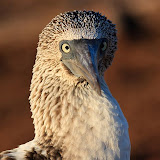
The Galápagos are also a bird watcher’s paradise, especially in Punta Suárez in Española, and the island of North Seymour. Blue-footed boobies are arguably the most famous bird species in the archipelago, not only due to their bright blue feet, but also their strange mating dance, in which the male moves like he’s stepping on eggs to show off his blue feet, stopping every now and then to whistle and boast his wing span to the female. Watch it in this video by National Geographic.


But the Mating Dance Oddity Award goes to the magnificent frigatebird: to attract females, males inflate a bright red pouch on their chest, and when a female flies by, they trill and shake their body all over like a drag queen in a Rio carnaval party. Watch it in this video by Nihoa


But while all this may sound fun and heavenly, reality is not so rosy – native species are threatened by habitat loss, overfishing, non-native species (such as domestic animals), and climate changes. 50% of the Galápagos flora and fauna species are currently threatened or endangered mostly as a result of human actions. The Galápagos National Park has several programs to prevent further habitat deterioration, but they can’t tackle all the issues. It is up to each of us to minimize our impact on other species, not only in Galápagos but everywhere we go, and make sure they continue to play a role in our planet.

Monday, April 5, 2010

Steamy Affair

Iceland

Two days before my trip, a volcano that had been dormant since the 1820s erupted in Iceland and all airports were closed. One day before my flight, local air mechanics went on strike and again air travel was disrupted. I started to think that the Viking Gods wanted to foil my trip so when I finally landed in Iceland and headed for my first outing, I felt so happy that I almost jumped out of the hotel lobby like a frolicking gazelle…only to be almost knocked down to the ground, not by a greedy mugger, not by a flock of territorial geese, but by the wind. It makes NYC wintry gusts feel like a gentle fall breeze, and while it kept blowing and forcing me to walk like a drunk, the question crept into my mind – what kind of lunatic would come here outside summer?

The Vikings were certainly tough (or crazy) enough to tackle this environment: they and their Celtic slaves were the first permanent settlers in 874. Isolated for centuries and highly dependent on fishing and agriculture, Iceland was one of the poorest countries in Europe, but experienced substantial growth after its independence in 1944 thanks to Marshall aid and diversification into activities such as services, technology and finance. Nowadays, Iceland is highly developed, ranks 3rd in the latest UN Human Development Index, and boasts one of the highest literacy (99%) and internet penetration (93%) rates in the world. But I bet they wished they had remained isolated when the global crisis hit in late 2008…

Formed by eruptions some 20 million years ago, Iceland has 130 volcanic mountains, of which 15 to 20 active ones continue to shape the landscape. Its volcanoes are so active that an eruption takes place every four to five years, and Iceland has produced 1/3 of the world’s lava output over the past 1,000 years. All this activity is due to Iceland’s unique position: it sits on a hotspot and is cut from southwest to northeast by the Mid-Atlantic Ridge, the boundary between the Eurasian and North American plates that are separating at a rate of 1 in. (2.5 cm) per year.

The most famous volcano in the country is Hekla, known as the “Gateway to Hell” in the Middle Ages. But Hekla is not the most feared; that distinction goes to Katla, which sits underneath a glacier and erupts once or twice every century, the last time in 1918. Its magma chamber is currently full and the recent eruption nearby brought fears that it will trigger Katla. Besides ash clouds that could block solar rays and cause a global cooling, a Katla eruption would melt the glacier and could create a flood discharge larger than the combined flow of the Amazon, Mississippi, Nile and Yangtze rivers.

If on one hand this geological turbulence makes Iceland one of the most unstable places on earth, it gives them cheap geothermal energy: the average electricity/hot water bill is only €35-40 per month. Geothermal waters abound in Iceland, and have become an essential part of the culture: there are close to 200 thermal pools in the country, and the most famous is the Blue Lagoon, a saltwater spa with balmy 104°F (40°C) waters filled with algae, silica and minerals. The first thing I noticed when I got there was the smell of sulphur, and I thought right away that I was in Hekla, the Gateway to Hell. But once I sunk in those incredible clear waters, every muscle in my body loosened up, it felt like heaven, and it was such an experience to be in frigid outdoors wrapped in steaming water that I actually wished it’d snow to make it even more unique. In the end, smelling of sulphur, with algae on my hair and silica mud mask on my face, I probably looked like the deranged child of a Medusa-Joker union…but the Blue Lagoon is an absolute must.

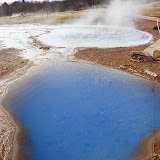
Geysers, hot springs and mud pools are other byproducts of this geothermal power, and in Iceland, you can actually get close to Geysir, the original after which all others were named. Geysir used to blow water 260 ft (80 m) up in the air until some stupid tourists threw rocks and clogged it in the 1950s. It began erupting again after an earthquake in 2000, but not to its former height. It’s hard to see Geysir in action - it only blows 2 or 3 times daily, but Strokkur, its neighbor, bursts every 5 minutes or so.

If fire created Iceland, ice is what made it famous – glaciers cover 11% of the country, and a popular tourist activity is a glacier hike. I picked one that included a bit of ice climbing, and I have to say, the preparations were a pain: you need a harness, a helmet, crampons and an ice axe. It was exhausting putting on all that gear, and when I actually saw the group with those piercing steel crampons and axes, I couldn’t help but think that it would be the perfect beginning for “Saw XIII - Glacial Feast”. Anyway, the crampons were straightforward: we just had to stomp like cavemen. Piece of cake. Ice climbing sounded easy too - stick the axes and the tips of the crampons in, and up you go. But I guess people like me who’ve only seen ice in drinks were not meant to tackle a frozen wall – I only made it to the top after a lot of slipping and ice scraping, and my only consolation is that nobody I know was there to witness my crippled gecko act.

A less strenuous activity is looking for the Northern Lights. Sightings are not guaranteed but our guide assured us from the start – “We’ll find them, don’t worry. I’ll keep my eyes on the sky”. And while I prayed that he didn’t crash while keeping his eyes on the sky, he suddenly stopped the van and yelled “Northern Lights ahead!” We all dashed out, looked up and for a moment I thought he had just had a supersized cup of mushroom tea. The sky looked black! “There they are!”, he said, pointing at what looked like a streak of fading clouds. It was indescribably underwhelming, but I decided to take a picture anyway. And when I saw the photo, I could barely believe my eyes: there it was, a serpent of bright green light (check the woefully blurry picture that looks taken during an earthquake). So when it comes to Northern Lights, your camera, not your eye, is the one that’s going to see it; take an SLR (not a point & shoot), a tripod (very, very, very important), and leave the shutter open at least 15 seconds.

One thing you can only do in Iceland is travel by super jeep, a 4x4 on steroids that can conquer streams, ice, and snow. I joined a tour that took me to Langjökull, the second largest glacier in Iceland at 390 sq. miles (1,000 sq. km), and as my luck would have it, when we got there, the temperature was 16˚F (-10˚C), it was snowing, glacial winds were blowing. As I stood on 16 ft (5 m) of snow in a perfect whiteout, snow whipping my face, no sound other than the wind, that vast glacial desert felt incredibly peaceful, and I was reminded that the most memorable moments in life are not those under perfect conditions, but those with the most spectacular surprises.

In the end, I got the answer to my question: the lunatics that come here are those who want to escape their daily madness and experience one of nature’s masterpieces, a place of dramatic extremes, stark contrasts and endless beauty. A place that awes, captivates and reminds you that there’s a lot more to life than the daily grind.

Wednesday, March 3, 2010

Wild Venice Of The Swamps

South Florida

Fort Lauderdale is called the Venice of America, but before anyone starts gloating over that, let me say that there are over a dozen cities around the world known as the “Venice of Somewhere”. Venice of the North alone can refer to any of these cities: Amsterdam, Birmingham, Borås, Bornholm, Bruges, Copenhagen, Giethoorn, Haapsalu (and if you know where that is, you should be on a game show), Hamburg, Manchester, Maryhill, St. Petersburg, Stockholm, Trondheim or Wroclaw. And let’s not forget Bangkok, Venice of the East, or Recife, Venice of Brazil (a real stretch). Seriously, shouldn’t Venice be getting royalties from all these “sister” cities?

At least Fort Lauderdale boasts 300 miles of waterways and canals, so I guess the moniker is deserved. But canals are not the only thing that Fort Lauderdale has in common with Venice: the other is decadence. The Carnival of Venice was so decadent that over the centuries numerous laws were enacted to restrict celebrations, including a ban on the wearing of masks, which protected the wearer’s identity while engaging in promiscuous activities. Fort Lauderdale, on the other hand, is still known as the spring break capital of America even though the number of spring breakers is now nowhere near the 350k that once swarmed the city.

Spring break is still a few weeks away, but I did see wild things down there. The weather was horrible on the first day, so we chose to go to the Everglades and ended up doing something shamelessly touristy: taking an airboat ride in search of alligators. I was warned that they can jump, but figured that the chances of an alligator sprinting out of the water and landing on the airboat to make a meal out of bony me were pretty slim. I did see a couple alligators and they were lounging so still that you'd think they were made of stone. To be honest, I was more afraid of some campers I saw there: wearing camouflage clothing and carrying machetes, I wasn’t sure if they were hunting for local delicacies such as gator tails and frog legs, auditioning for the movie “Machete” or going to serial killer training camp. Anyway, if I were forced to choose between the alligators and the camouflaged macheted campers, I’d take the former. At least I know what they’re about.