This is one nifty idea that happened by chance. It's absolutely uplifting and I bet you'll have a smile on your face after watching the video: http://www.wherethehellismatt.com/
Saturday, November 7, 2009

Sunday, September 27, 2009
Irish Invasion
 |
| U2 |
 |
| Snow Patrol |
You’d be forgiven if you thought it was St. Patrick’s as two Irish bands landed in NYC this past week: U2 played Giants Stadium on September 23 and 24; Snow Patrol played the Beacon Theatre September 22 and 23.
U2 needs no introduction – they’ve been around a long time, since 1976 to be precise when they formed the band under the name Feedback. The first U2 song I ever heard was the live version of Sunday Bloody Sunday, and it just blew me away – it was passionate, desperate, visceral. It was love at first sound. At the time, no company distributed them in Brazil, and I could only get their records (yes…it was that long ago, when CDs weren’t even commercialized) in one of only 2 stores in Rio that sold imported records. I thought at the time that I’d probably never ever have the chance to see them live.
And there I was last Thursday at Giants Stadium for my 6th U2 concert remembering all this. I have to be honest, though: I didn’t care for their latest album “No Line On The Horizon”. It sounds like they wanted to take their music in a new direction but didn’t quite get there so the album feels vague at best. I can even say that U2 haven’t written any song that blew me away in the past decade or so, but their success is undeniable: on Thursday, U2 broke the Giants Stadium attendance record, bringing in 84,472 fans (the previous record was held by Pope John Paul II with 82,948 people in 1995). It sure felt like a crowd: it took me over one hour to get from the NJ Turnpike exit to the parking lot, a distance of less than 2 miles (~3.2 km)!
This is their 360° Tour, so called because the stage set-up allows viewing from any angle. The stage was nicknamed The Claw by the band and crew, and to me, it looked like a giant alien insect when I first laid eyes on it. It’s a gigantic production: the stage is 164 ft (50m) tall and requires 120 trucks to transport. The video screen is circular, made up of over 1 million pieces that allow it to move up and down and also spread apart vertically so it becomes more than just a screen – it’s a crucial part of the visual effects. It’s hard to explain in words how the screen works, but you’ll understand when you see the photos.
But as impressive and innovative as the setup was, for me the best moment of the show had nothing to do with the production: it was during “I Still Haven’t Found What I’m Looking For” when the audience started singing along. And those tens of thousands of voices singing in unison just sent chills down my spine.
Snow Patrol was the other Irish band of the week, although they’re no longer totally Irish since the lineup now includes 2 Scotsmen. Snow Patrol started life as Shrug in 1994 but only became popular in the US in May 2006 when “Chasing Cars” was played in the season finale of “Grey’s Anatomy”. I first saw them on a freezing night in late March 2006 at the Bowery Ballroom, a minuscule venue for 550 people in Manhattan’s Lower East Side. The venue is so small that when you stand on the first row, you can actually rest your arms on the stage. I got there 20 minutes before the start of the show thinking I’d end up in the back of the venue, but somehow I managed to squeeze my way to the second row and to this day I want to kill myself for not taking my camera…
This time, I caught them at the Beacon Theatre on the Upper West Side, a 2,800-seat venue. The great thing about a small place is that you can really see the musicians, how they interact with the audience and with each other. And Snow Patrol is a fun act to watch: they create a great rapport with the audience, and their songs are contagious without being clichéd, with strong melodies that have earned them the admiration of musicians as diverse as Bono of U2, Michael Stipe of REM and Nikki Sixx of Mötley Crüe (!?…go figure this one out…). Plus, there’s Gary Lightbody, the most charming frontman I’ve ever seen in a rock band. He’s witty, he’s funny, and has one of the 3 most beautiful voices I’ve heard in the past 5 years (the others are Tom Chaplin of Keane, the most accomplished singer of the three, and Paul Banks of Interpol, the least accomplished of the three, but who has a powerful baritone voice that can stop you in your tracks). When Lightbody starts to sing, I melt like a chocolate bar in the summer sun…
For me, the highlight of their show was something totally unexpected. There’s a song I love from their latest album “A Hundred Million Suns”, but the song is 16+ minutes long and every time I listened to it, I lamented that I’d never listen to it live because no band would ever play a song that long on a live show. They did, and I was on cloud 9. Snow Patrol are entertaining, surprising, they can make you sing and can make you laugh. And sometimes that is just priceless.
Tuesday, September 15, 2009
Who's Afraid Of Social Democracy?
 |
| Sweden |
Some trips are planned, others are accidental. For Labor Day, my choices were the Northwest U.S. or the Caribbean. I soon discarded the Caribbean – with the hurricane season, bad weather was a real threat. And traveling to the Northwest wasn’t cheap around the holiday. Then I started looking at European cities with direct flights from the U.S., more out of curiosity than anything else. I found one with airfares costing merely $70 above tickets for the Northwest – and that’s how I ended up in Stockholm, Sweden.
Sweden is slightly bigger than California, and its population of 9.2 million is about ¼ that of the Golden State. Many associate Sweden with Abba, Ikea, or Nobel Prizes, but having been there before, I always viewed the country as one of the most advanced societies on earth and its rankings confirm that - Sweden is first in the world in the latest Economist’s Democracy Index, third in Gender Equality and seventh in the UN’s Human Development Index. Not bad for a place filled with Barbarians some centuries ago.
Sweden is a social democracy, with many ideas borrowed from socialism (and I can hear some people gasping at the S-word). It has one of the world’s highest tax burdens with a tax-to-GDP ratio of 48% (the U.S. is ~28%), and taxes fund one of the most generous welfare systems in the world, with virtually free schools, child care, health care, pensions, and elder care. And as the debate about U.S. health care reform rages on, I couldn’t help but research how things work over there.
In Sweden, health care costs 9% of GDP (vs. 16% in the U.S.), funded mostly by taxes (70%), with only 3% coming from patient fees – patients pay only SEK 80 (~$11.50) per day for hospital stays, and no more than SEK 1,800 (~$260) in consultations and medications per 12-month period. The health care system is decentralized, with counties responsible for providing services – each county owns all emergency hospitals while about 25% of health centers are outsourced to privately run companies. Sweden ranks 10th in the world in life expectancy, and even though U.S. health care spending is almost double the percent of GDP than Sweden's, the U.S. ranks 50th, 7 spots behind Bosnia Herzegovina (don’t jeer, Brazilian friends, because Brazil ranks behind Gaza!)
Swedes are doing something right, but nothing is perfect: a major complaint is the long waiting time for non-emergency treatment. So the government came up with a rule to minimize that: if the waiting time exceeds three months, the patient is offered care in a county other than their own, with all costs paid for by their own county, including travel. The Swedish health system sounds so good that I wish I’d sprained an ankle just to experience first hand this “socialist” system…
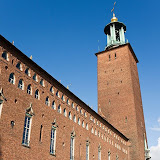
Sweden has a long seafaring history, and perhaps this is more evident in the capital Stockholm, known as “Venice of the North” and spread over 14 islands connected by over 50 bridges. About 30% of the city area is made up of waterways, with another 30% covered by green spaces, making it one of the greenest cities in Europe. In fact, earlier this year, Stockholm won the first European Green Capital title awarded by the European Commission, and it aims to be “fossil fuel free” by 2050.
The heart of Stockholm is Gamla Stan (Old Town), the city’s oldest section founded in the 13th century. From the mid-19th to the mid-20th century, the area was a slum, but in the 1980s, people started to value the maze of cobbled streets lined with medieval buildings, and the island is now one of city’s main attractions. For the best of Gamla Stan, don’t just stick to Västerlånggatan, the very commercial main thoroughfare. Take any side street and roam aimlessly, not worrying about getting lost – Gamla Stan is so small that you’ll always end up by the water.
For boat fiends, two places are a must. One are the docks on the eastern side of the small island of Skeppsholmen, with still functioning old vessels, some built in the 19th century, some made entirely of oak. It looks more like an impromptu museum than a pier. The other is the Vasa Museum on the island of Djurgården. Vasa was a 64-gun warship, the first of its kind built in Sweden, designed to be the mightiest in the world at the time – measuring 230 ft (69 m) in length and 172 ft (52.5 m) in height, and decorated with numerous statues, Vasa was to be a symbol of Sweden’s wealth and power. The ship is majestic and I can only imagine the excitement surrounding its maiden voyage in 1628: hundreds at port watching Vasa set sail, proud as they could ever be of such an imposing vessel. After Vasa traveled about a nautical mile…it capsized and sank, and in this case, there wasn’t even an iceberg to blame. The ship slumbered in the bay for 333 years until it was finally recovered in 1961.
On the same island as Vasa is Skansen, the world’s first open-air museum with a collection of traditional Swedish houses and shops brought from different parts of the country. Staff in period costumes recreate life in centuries past and demonstrate weaving, glass-blowing, and blacksmithing among other crafts. Skansen is entertaining for both adults and children, and with 75 acres, you can easily spend a day there.
Sweden is a monarchy and you can actually visit sections of the palace where the royal family lives in Drottningholm (there is another palace in Gamla Stan, used only for state functions). On the day we went, there was an official reception but the palace remained open for visitation and around 3 pm, King, Queen and guests came outside for official photos, and I managed to take a few pictures. So from now on, every time I speak of this episode I’ll say that I’ve encountered Swedish royalty on palatial grounds and have had the pleasure of sharing the gardens with them.
If Stockholmers are any indication, Swedes are unassuming, extremely polite people with a very high level of education (everyone we met spoke English) and apparently healthy (about 85% of the population are non-smokers and less than 10% are obese). And for Americans fearing that the healthcare public option may lead to socialism, Sweden and other developed countries prove that market economies can provide quality universal healthcare for their citizens. It’s mainly a question of putting people before private profits.
Wednesday, July 22, 2009
Love And Designer Clothes Are All You Need
 |
| Italy |
Italy was never at the top of my destination list. But having been to the country twice now, I have to admit it’s one of the most fascinating I’ve visited. Italy is about the size of Arizona (and slightly bigger than Rio Grande do Sul), but it’d be hard to find a place so small that left such a huge legacy, from law to religion to arts to food. Italy fascinates me because it’s hectic but welcoming, boisterous yet sophisticated, touristy but retains its local flavor. Italy was the stage for the rise and fall of many a great empire, and nowadays it arguably rules in the fashion world. Who hasn’t heard of Armani, Gucci, Prada, Versace, Dolce & Gabbana?
Nowhere is this more evident than in Milan’s Quadrilatero D’Oro (Golden Quad), the designer shopping district lined with flagship stores from all top designers. I’m no fashionista, but the sight of those windows one after the other made me want to go on a shopping spree. But I didn’t...way too expensive. Instead, I saved my splurging for something I regretted not getting on my first trip to Italy 10 years ago: a Venetian mask. The masks originally appeared in medieval times, a period of cultural and religious repression, and protected the wearer’s identity while engaging in decadent or promiscuous activities. Traditional Venetian masks are handmade with papier-mâché and when you see the real thing you have to marvel at the art and skill that went into them, very different from the ones made in China with resin or PVC. They’re things of beauty and I couldn’t resist getting one.
So this is definitely not going to be my last time in Italy as I still haven’t seen any place south of Rome: Naples & Pompeii, the Amalfi Coast, Sardinia, Sicily. In the meantime, I’ll keep in my memory one of the last images I saw on this trip, which in a way sums up perfectly what Italy is about: right in front of the main gate of the Duomo, two pigeons started to seriously make out (and if God really disapproved of sex, the two of them would have been fried by lightning for the audacity of making it in front of the cathedral!) while steps away three young models, skinny legs like stilts, were striking poses for a camera. Lust and fashion side by side…there couldn’t be a more representative picture of Italy.
Thursday, July 9, 2009
It's Not What You Think...
 |
| Slovenia |
Yugoslavia (literally “Land of the South Slavs”) was the idea for a single state for all South Slavic peoples and came into being after WWI. During WWII, Yugoslavia was occupied by Nazi and Fascist armies, and the communist Yugoslav Partisans, led by Marshal Tito, became a major resistance force. After the end of the war, Tito, regarded as a hero, was elected to lead the new independent communist state of Yugoslavia, which comprised six socialist republics (Bosnia and Herzegovina, Croatia, Macedonia, Montenegro, Serbia and Slovenia) and two autonomous provinces (Kosovo and Vojvodina), where all nations and nationalities were supposed to have equal rights. However, resentment over Serb hegemony within the federation led to ethnic tensions and after Tito’s death in 1980 and the fall of communism, nationalism grew, particularly in Slovenia and Croatia. On December 23, 1990, Slovenes overwhelmingly voted for independence, and on June 25, 1991, Slovenia pulled out of the Yugoslav Federation. Two days later, the Yugoslav army marched into Slovenia, but met strong resistance and threatened war. But unlike other republics, there were no minority issues (ie, there was no Serb minority in Slovenia), and on July 7, ten days after the beginning of the conflict, the Yugoslav government agreed to withdraw its troops from Slovenia within three months. Since its independence, Slovenia has been the most stable country of the former Yugoslav republics.
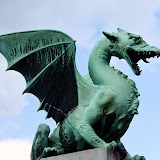
Slovenia is small, covering only 7.8 sq. mi (20 thousand sq. km). Its population is 2 million, and only 276,000 call the capital Ljubljana home. According to legend, the Greek prince Jason and the Argonauts (perfect name for a pop band) stole the golden fleece from King Aites and fled through seas and rivers until they reached the Ljubljanica River. Upon arriving, they were attacked by a dragon, but managed to slay it and founded Ljubljana. Nowhere in the city can you find any mention of or homage to Jason and the Argonauts, his bandmates…I mean, his companions, but the dragon, on the other hand, is immortalized on the city’s coat of arms and flag, on the Dragon Bridge and in numerous souvenir shops as a plush toy.
The city feels like a small town, and was the perfect place to kick back and relax after the overwhelming crowds in Venice. Ljubljana lacks major landmarks, but makes up for it with a rich cultural calendar during summer. When we arrived the Jazz Festival was on, as was the Ana Desetnica street theatre festival, in which artists from several countries (from Argentina to Australia) fill streets and squares with music, dance, mime, and circus acts. Some performances were basic, like juggling and fire eating, but others were more elaborate. My favorite was one in which a troupe (several of them on stilts) arrived on a white “ship” at Prešernov Trg, the main square, and at some point unrolled this gigantic tube; everyone was wondering what that was for and soon the answer came – it was for blowing out foam, which soon covered the audience, and turned the square into a sea of foam in which everyone was dancing and frolicking! That was a blast!
With only 28 miles (45 km), the Slovenian coast is very small, but there is an alternative: the subalpine Lake Bled, located about one hour from the capital. The lake sits among mountains and is one of the most popular destinations for Slovenes, where they ski in winter and sunbathe, swim or canoe in summer. It’s also very popular for weddings: besides the picture-perfect scenery, there’s a church on a small island in the middle of the lake. Wedding parties board a local boat called pletna and glide through the waters to the bottom of the church stairs. That surely beats arriving in a limo.
Beautiful though as Bled is, it’s not the #1 attraction in the country. That distinction goes to the Postojna Cave, the longest cave system in the country where so far 12 miles (20 km) of subterranean paths have been discovered. The caves are pretty impressive, with soaring chambers, massive stalagmites and stalactites, but I didn’t like much how the visit is organized: you board an open train that meanders through 2.5 miles (4 km) to the bowels of the cave (tall people have to watch out because some of the galleries are so low they could give you a few stitches on the head), then you are assigned to a group based on language, and herded through a 1-mile path (1.7 km). More fun should be one of the underground adventures for small groups (3-day advance booking required), which takes you to areas not open to the general public.
A visit to the cave can be combined with a stop at Predjama Castle, 5.5 miles (9 km) away. While the interior is bland, the setting is extraordinarily unique – the castle is perched on a cliff under a natural arch and seems to grow right out of the mountain. The castle was featured in Ghost Hunters International last year and the conclusion was that the castle is indeed haunted. I bet it’s the ghosts of Jason and the Argonauts, totally ticked off because, after all, it’s the Dragon that rocks.
Sunday, July 5, 2009
It Was Happiness And I Didn't Realize It
Venice is iconic. Even if you’ve never been there, you can picture gondolas gliding along countless canals, labyrinthine alleys flanked by pastel buildings, imposing palaces overlooking the Grand Canal, a diverse architecture that spans the Byzantine, the Gothic, the Renaissance and the Baroque, with varied elements such as arcades, balconies, covered bridges, columns, loggias. Venice inspires romance, even when originally there was nothing remotely romantic: many people, for instance, marvel at the Bridge of Sighs, imagining that the name was inspired by lovers’ sighs when, in reality, the bridge led to a prison and was so named because prisoners sighed on their way to the dungeons…Nowadays, the Bridge of Sighs will likely give rise to groans of disappointment as it is surrounded by Sisley billboards (one of the Benetton brands), so many that you wouldn’t notice the bridge if you didn’t know it was there. Sisley is contributing to renovations of the surrounding buildings, but still…did they need to put an ad right on top of the bridge?
Venice was historically an independent nation, and its history started in the 5th and 6th centuries as mainland inhabitants fled the barbarian invasions and sought refuge in the islands of the Venetian lagoon. Due to its strategic position, Venice became an important trade center between Western Europe and the rest of the world, and its involvement in the Crusades brought treasures plundered from Constantinople and extensive territories. By the end of the 13th century, Venice was the most prosperous city in Europe and its fleet of 3,300 ships dominated Mediterranean commerce. During this period, Venice’s leading families vied with each other to build the most sumptuous palaces and patronize the greatest artists.
Venice’s decline started in the 15th century with the loss of some of its territories to the increasingly powerful Turks, followed by the discovery of the Americas and a new sea trade route to India, which put an end to Venice’s route monopoly. After over 1,000 years, Venice lost its independence in 1797 when it was conquered by Napoleon. It then became part of the Austrian empire before it was finally annexed by the newly created Kingdom of Italy in 1866.
Venice encompasses 118 islands, 150 canals, 410 bridges, and is divided into six sestieri (districts): Cannaregio, Castello, San Marco, San Polo, Dorsoduro and Santa Croce, and these divisions are so ancient that the gondolas in the city have a metal piece in front with six notches pointing forward representing each sestiere. The main sestiere is San Marco, the location of Piazza San Marco, the Basilica di San Marco, the Doge’s Palace, and a number of museums and historical buildings. This is the most heavily touristed area in the city.
This was my second trip to Venice; I first came in November 1999, spending 3 days in cloudy and damp weather. We arrived in late afternoon when it was already getting dark, and after we settled in our hotel, we headed to Piazza San Marco, which we found eerily empty and dark. We went again the next morning, and found that there were more pigeons than people, some flying by so close that I thought they were kamikaze. We never saw the sun, and I kept thinking that I’d have to come back someday in summer to see the city in a different light.
So here I was again, this time in summer, and I instantly realized that worse than being swarmed by a bunch of kamikaze pigeons is being surrounded by legions of kamikaze tourists who move around without looking where they’re going and end up crashing into you. Plus, no pigeon would ever land smack in the middle of the scene you’re trying to photograph dressed head to toe in bright pink garb acting like it belongs there. Tourists were so numerous that they were even causing gondola jams…
What I’m describing is especially true in the San Marco sestiere. And though it’s great to admire the elaborately built, history-steeped Piazza, there were so many people that we felt suffocated, and decided we needed some breathing room; so we went for my favorite Venetian experience - getting lost. Venetian streets form a huge maze and you’ll inevitably get lost at some point, so make it to your advantage and grab the chance to go where most tourists don’t go. The best places to get lost in are the sestieri of Cannaregio, Castello and Dorsoduro, where much to our surprise, we could still find empty streets/canals even in summer.
A good day trip from Venice is to one or more of the neighboring islands. Most people head to Murano, famous for its glass. But I myself prefer Burano, a fishing town known for its lace and the quaintest village I’ve ever seen, with each house in a different pastel color. When we came in 1999, we seemed to be the only tourists on the island; we strolled for a couple hours barely seeing anyone else, and it felt like we had the whole place all to ourselves. Now, that was romantic! This time, a load of other people got off the ferry with us, and I thought it might be as crowded as San Marco, but fortunately I was wrong. Most tourists headed to the main street with its lace stores while we headed to the residential area, which this time was bursting in even more colors as almost every windowsill had flowers on it. Burano remains my favorite place in Venice, even more so now that I’ve discovered that the island still allows you to find a secluded place, even in the peak of summer.
I’ve met people who deem Venice the most beautiful city in the world, and I’ve met some who were not much impressed. Either way, no one can deny that there is no place like Venice, and this second time around, the city’s alleys and canals still enchant, retaining its timelessness despite having become essentially a tourist town. To me, the thing about Venice is that you need to feel transported to another era to be able to really appreciate the city, to be able to get your head around the work of centuries that made Venice what it is. I absolutely had it in 1999, in the quietude and coolness of late fall. It was harder this time amongst the hordes, but maybe that’s just another fascinating aspect of the city: once you get lost, that’s when you discover a Venice to call your own.
Venice was historically an independent nation, and its history started in the 5th and 6th centuries as mainland inhabitants fled the barbarian invasions and sought refuge in the islands of the Venetian lagoon. Due to its strategic position, Venice became an important trade center between Western Europe and the rest of the world, and its involvement in the Crusades brought treasures plundered from Constantinople and extensive territories. By the end of the 13th century, Venice was the most prosperous city in Europe and its fleet of 3,300 ships dominated Mediterranean commerce. During this period, Venice’s leading families vied with each other to build the most sumptuous palaces and patronize the greatest artists.
Venice’s decline started in the 15th century with the loss of some of its territories to the increasingly powerful Turks, followed by the discovery of the Americas and a new sea trade route to India, which put an end to Venice’s route monopoly. After over 1,000 years, Venice lost its independence in 1797 when it was conquered by Napoleon. It then became part of the Austrian empire before it was finally annexed by the newly created Kingdom of Italy in 1866.
Venice encompasses 118 islands, 150 canals, 410 bridges, and is divided into six sestieri (districts): Cannaregio, Castello, San Marco, San Polo, Dorsoduro and Santa Croce, and these divisions are so ancient that the gondolas in the city have a metal piece in front with six notches pointing forward representing each sestiere. The main sestiere is San Marco, the location of Piazza San Marco, the Basilica di San Marco, the Doge’s Palace, and a number of museums and historical buildings. This is the most heavily touristed area in the city.
This was my second trip to Venice; I first came in November 1999, spending 3 days in cloudy and damp weather. We arrived in late afternoon when it was already getting dark, and after we settled in our hotel, we headed to Piazza San Marco, which we found eerily empty and dark. We went again the next morning, and found that there were more pigeons than people, some flying by so close that I thought they were kamikaze. We never saw the sun, and I kept thinking that I’d have to come back someday in summer to see the city in a different light.
So here I was again, this time in summer, and I instantly realized that worse than being swarmed by a bunch of kamikaze pigeons is being surrounded by legions of kamikaze tourists who move around without looking where they’re going and end up crashing into you. Plus, no pigeon would ever land smack in the middle of the scene you’re trying to photograph dressed head to toe in bright pink garb acting like it belongs there. Tourists were so numerous that they were even causing gondola jams…
What I’m describing is especially true in the San Marco sestiere. And though it’s great to admire the elaborately built, history-steeped Piazza, there were so many people that we felt suffocated, and decided we needed some breathing room; so we went for my favorite Venetian experience - getting lost. Venetian streets form a huge maze and you’ll inevitably get lost at some point, so make it to your advantage and grab the chance to go where most tourists don’t go. The best places to get lost in are the sestieri of Cannaregio, Castello and Dorsoduro, where much to our surprise, we could still find empty streets/canals even in summer.
A good day trip from Venice is to one or more of the neighboring islands. Most people head to Murano, famous for its glass. But I myself prefer Burano, a fishing town known for its lace and the quaintest village I’ve ever seen, with each house in a different pastel color. When we came in 1999, we seemed to be the only tourists on the island; we strolled for a couple hours barely seeing anyone else, and it felt like we had the whole place all to ourselves. Now, that was romantic! This time, a load of other people got off the ferry with us, and I thought it might be as crowded as San Marco, but fortunately I was wrong. Most tourists headed to the main street with its lace stores while we headed to the residential area, which this time was bursting in even more colors as almost every windowsill had flowers on it. Burano remains my favorite place in Venice, even more so now that I’ve discovered that the island still allows you to find a secluded place, even in the peak of summer.
I’ve met people who deem Venice the most beautiful city in the world, and I’ve met some who were not much impressed. Either way, no one can deny that there is no place like Venice, and this second time around, the city’s alleys and canals still enchant, retaining its timelessness despite having become essentially a tourist town. To me, the thing about Venice is that you need to feel transported to another era to be able to really appreciate the city, to be able to get your head around the work of centuries that made Venice what it is. I absolutely had it in 1999, in the quietude and coolness of late fall. It was harder this time amongst the hordes, but maybe that’s just another fascinating aspect of the city: once you get lost, that’s when you discover a Venice to call your own.
Friday, July 3, 2009
Ditch The High Heels
Cinque Terre is a group of five car-free villages that cover 11 miles (18 km) on the Italian coast between Genoa and Pisa, an area that was designated a Unesco World Heritage site in 1997 and became a national park in 1999. The villages cling to steep cliffs that plunge right into the sea and centuries ago, farmers built terraces supported by dry-stone walls on these slopes to cultivate vineyards. Nowadays, reduction in cultivated land is putting the area at risk because, if the hillsides are not worked, they become unstable and may just slide into the sea. Albeit less, wine production still goes on, and “Sciacchetrà”, a dessert wine, is perhaps the most famous. In local dialect, the name means “press it and forget about it for a long while” and it’s made by allowing the grapes to dry over a long period. This process eliminates much of the grape’s water and concentrates the sugar so this wine is known for it sweetness. And now I feel really proud because I almost sound like a wine connoisseur or someone who’s just swallowed a wine encyclopedia, but those who know me, know that I just can’t stand the taste of alcohol, especially that bitter aftertaste it leaves in your mouth. But Sciacchetrà is different: although the taste of alcohol is quite noticeable, it instantly disappears once you swallow it, leaving a sweet aftertaste, and that was just perfect for me.
All five villages in Cinque Terre are connected by Trail 2 (or Blue Trail) that runs along the coast from Riomaggiore to Monterosso, a trek that takes some 5 hours. You can also take the milk train (so called because it used to deliver milk and mail) that connects all villages. It’s worth getting the Cinque Terre card that includes train transport - it allows unlimited access to all trails and unlimited use of trains/vans. But very important: validate it on the yellow machine by the ticket window before you first use it, otherwise it’s a €50 fine.
The largest and easternmost village is Riomaggiore, also home of the main park office. This medieval village takes its name from Rivus Maior, the river that runs under the main road, and features typical buildings called “case torri” (tower houses), with three or four floors and no more than two rooms per floor. All villages have narrow alleys with countless slopes and steps, so an added benefit of such a Mediterranean vacation is that you also get in shape (provided you don’t collapse from exhaustion first). Even though we arrived without reservations, we lucked out and found an apartment with sea view. The view was stunning, but we had to negotiate 75 steps to get there…it may not sound much, but when you’re carrying a suitcase, it feels like the stairway to hell! So pack light; Cinque Terre is definitely one of the worst places to be if you have a large suitcase.
Right from the train station in Riomaggiore, you can take the Via Dell’Amore (Love Road), the most famous path in Cinque Terre, and one that gets so crowded that there are at times hiker jams. Only 0.6 miles (1 km) in length, it overlooks the sea and legend has it that the path got this name because lovers drew inspiration for their romantic declarations from the beauty of the promenade. I noted several cacti dotting the path and I’m sure that this has some deep philosophical meaning…maybe that the path of love is filled with thorns (am I cynical or what?). At one point on the promenade, there’s a little alcove with the symbol of Via Dell’Amore: a statue of two lovers facing each other. Around it there are several locks that couples place there to represent that their love is “locked” for eternity. I’m sure that it was a lock manufacturer who came up with this concept.
The Via Dell’Amore links Riomaggiore to Manarola, reputedly the town with the most vines. That’s probably true as the vineyards encircle the town and go almost all the way to the top of the hill, some 2,000 ft (600 m) above sea level. Billboards near the harbor show old photos of farmers carrying enormous baskets filled with grapes on their heads and, having almost collapsed carrying my suitcase up and down those slopes/steps, I can’t help but have the highest admiration for the willpower and resilience of those people carrying that weight down those hills every single day during harvest.
Manarola is probably the best town to be at sunset because the sun illuminates it head on. Go past Manarola and continue on as if you were heading for Corniglia; you can stop before the path makes a sharp turn to the right (after which the town comes out of sight) or, for even better views, take the path that runs above the official trail, one that leads to a small cemetery, where you’ll actually find some of the best views. Another path worth taking is the one along the vineyards.
Continuing northwest on the coast, the next village is Corniglia, the only one that sits on an elevation above the sea, reached by climbing 382 zigzagging steps. It sounds worse than it feels, and you actually get to the top before you know it. But if by the time you visit Corniglia, you’re already fed up with all the slopes and steps, just take the green van from the train station straight to the center of town. Corniglia has the lowest population of all five villages and sees less tourists. Although not as charming as Manarola or Vernazza, Corniglia has some of the best views of the region from the Santa Maria Terrace. You can also see all the other four villages from there.
Vernazza, the next village, is the most popular with tourists, perhaps because its main area is very close to the train station and you can get there without climbing any steps. Vernazza has the only natural harbor in the region, and was strategically important during the Republic of Genoa. For that reason, its buildings are more elaborate than those in the other villages and include features such as portals, porticos and arcades. Vernazza’s focal point is Piazza Marconi, a square adjacent to the harbor, filled with restaurant tables. Also by the square is a little beach with black sand, which though not very attractive, beats the pebble or boulder beaches in Riomaggiore, Manarola and Corniglia.
Finally, Monterosso, the resort town of Cinque Terre and the most accessible by car. Of all towns, it is the only one on flat land, has a good stretch of pebble beach, and boasts the best tourism infrastructure with the largest number of hotels. In fact, Monterosso is so developed that for some time during the late 40’s, it was excluded from the Cinque Terre trail because officials thought it was too large. In Monterosso, I saw something that I believed existed only in Fellini movies: women with high heels on the beach! Now I understand why there are signs along Cinque Terre trails pointing out that high heels are not suitable for hiking...
All five villages in Cinque Terre are connected by Trail 2 (or Blue Trail) that runs along the coast from Riomaggiore to Monterosso, a trek that takes some 5 hours. You can also take the milk train (so called because it used to deliver milk and mail) that connects all villages. It’s worth getting the Cinque Terre card that includes train transport - it allows unlimited access to all trails and unlimited use of trains/vans. But very important: validate it on the yellow machine by the ticket window before you first use it, otherwise it’s a €50 fine.
The largest and easternmost village is Riomaggiore, also home of the main park office. This medieval village takes its name from Rivus Maior, the river that runs under the main road, and features typical buildings called “case torri” (tower houses), with three or four floors and no more than two rooms per floor. All villages have narrow alleys with countless slopes and steps, so an added benefit of such a Mediterranean vacation is that you also get in shape (provided you don’t collapse from exhaustion first). Even though we arrived without reservations, we lucked out and found an apartment with sea view. The view was stunning, but we had to negotiate 75 steps to get there…it may not sound much, but when you’re carrying a suitcase, it feels like the stairway to hell! So pack light; Cinque Terre is definitely one of the worst places to be if you have a large suitcase.
Right from the train station in Riomaggiore, you can take the Via Dell’Amore (Love Road), the most famous path in Cinque Terre, and one that gets so crowded that there are at times hiker jams. Only 0.6 miles (1 km) in length, it overlooks the sea and legend has it that the path got this name because lovers drew inspiration for their romantic declarations from the beauty of the promenade. I noted several cacti dotting the path and I’m sure that this has some deep philosophical meaning…maybe that the path of love is filled with thorns (am I cynical or what?). At one point on the promenade, there’s a little alcove with the symbol of Via Dell’Amore: a statue of two lovers facing each other. Around it there are several locks that couples place there to represent that their love is “locked” for eternity. I’m sure that it was a lock manufacturer who came up with this concept.
The Via Dell’Amore links Riomaggiore to Manarola, reputedly the town with the most vines. That’s probably true as the vineyards encircle the town and go almost all the way to the top of the hill, some 2,000 ft (600 m) above sea level. Billboards near the harbor show old photos of farmers carrying enormous baskets filled with grapes on their heads and, having almost collapsed carrying my suitcase up and down those slopes/steps, I can’t help but have the highest admiration for the willpower and resilience of those people carrying that weight down those hills every single day during harvest.
Manarola is probably the best town to be at sunset because the sun illuminates it head on. Go past Manarola and continue on as if you were heading for Corniglia; you can stop before the path makes a sharp turn to the right (after which the town comes out of sight) or, for even better views, take the path that runs above the official trail, one that leads to a small cemetery, where you’ll actually find some of the best views. Another path worth taking is the one along the vineyards.
Continuing northwest on the coast, the next village is Corniglia, the only one that sits on an elevation above the sea, reached by climbing 382 zigzagging steps. It sounds worse than it feels, and you actually get to the top before you know it. But if by the time you visit Corniglia, you’re already fed up with all the slopes and steps, just take the green van from the train station straight to the center of town. Corniglia has the lowest population of all five villages and sees less tourists. Although not as charming as Manarola or Vernazza, Corniglia has some of the best views of the region from the Santa Maria Terrace. You can also see all the other four villages from there.
Vernazza, the next village, is the most popular with tourists, perhaps because its main area is very close to the train station and you can get there without climbing any steps. Vernazza has the only natural harbor in the region, and was strategically important during the Republic of Genoa. For that reason, its buildings are more elaborate than those in the other villages and include features such as portals, porticos and arcades. Vernazza’s focal point is Piazza Marconi, a square adjacent to the harbor, filled with restaurant tables. Also by the square is a little beach with black sand, which though not very attractive, beats the pebble or boulder beaches in Riomaggiore, Manarola and Corniglia.
Finally, Monterosso, the resort town of Cinque Terre and the most accessible by car. Of all towns, it is the only one on flat land, has a good stretch of pebble beach, and boasts the best tourism infrastructure with the largest number of hotels. In fact, Monterosso is so developed that for some time during the late 40’s, it was excluded from the Cinque Terre trail because officials thought it was too large. In Monterosso, I saw something that I believed existed only in Fellini movies: women with high heels on the beach! Now I understand why there are signs along Cinque Terre trails pointing out that high heels are not suitable for hiking...
Thursday, July 2, 2009
God, Fashion and Stilettos On Testicles
Milan is the second largest city in Italy, renowned as one of the fashion and design capitals of the world. And you have to give it to the Milanese – they do know a lot about looking good. They are daring, and even though their experiments don’t always pay off (such as a man I saw with green glasses), when they get it right it’s distinctive and absolutely eye-catching. And since we’re talking about fashion, here’s a couple tips for the guys: try lavender shirts, which seems to be one of the colors of the moment; pastel enough not to shock your co-workers, but at the same time standing out in a sea of white and blue shirts. And what about your old blue shirts? Pair them with salmon pants and get out of the black/grey/navy rut. Trust me, it looks good.
The heart of the city is the Duomo, a gigantic Gothic cathedral sitting on a piazza with a size to match. God, in whose honor the cathedral was erected and who created the universe in six days (He sounds like a goal-oriented overachiever to me…and God knows I say that in the most positive way), must have pulled His hair out watching the construction of the Duomo: it took over five centuries to be completed. That’s not a typo…I did mean five centuries. Construction began in 1386 and is said to have ended in 1812, although some could argue that it actually ended much later because carving of the statues continued through the 19th century and the last gate was inaugurated in January 1965!
This was not the first time I visited the Duomo; I came in November 1999, and spent only one day in Milan. It was so foggy and I was so jetlagged that around 4 pm I was sitting on the steps in front of the cathedral, barely able to keep my eyes open. The only reason I didn’t fall asleep right there and then was that a handful of Hare Krishnas in bright yellow garb were clanging their bells and banging their drums right next to me and kept me awake. Krishna be with them for saving me from hitting the pavement.
It was a lot better this time. Maybe because it was a sunny summer day, or maybe because I took No-Jet-Lag tablets, I felt pretty good, and was able to have a better appreciation for the Duomo. The cathedral was designed to impress: it is 515 ft (157 m) long, 302 ft (92 m) high, its dome is 215 ft (65.5 m) high, and it can accommodate 40 thousand people. It houses 135 spires, over 3,200 statues (the largest collection in the world), and 146 stained-glass windows. Everything about the Duomo is grandiose, from its dimensions to its façade of Candoglia marble, from its numerous and elaborate carvings to its lengthy construction that required several innovations over time (e.g., how to transport and lift the huge stones). Inside, the Duomo is cavernous, gargantuan, but I found it too somber to be inspiring. Much more rewarding was the climb to the roof, allowing you to see up close the countless intricate spires and statues. When you see the Duomo from this point of view, you can almost forgive the constructors for such a botched workplan.
True to Milan’s fame as a shopping mecca, right next to the Duomo is the Galleria Vittorio Emanuelle II, completed in 1877 in honor of the first king of united Italy and reputedly the world’s oldest shopping mall. The galleria has a tragic story surrounding it: architect Giuseppe Mengoni, who designed it and worked on it for 12 years, died just weeks before completion when he fell from a scaffolding. Superstition has it that to avoid the same bad luck as Mengoni, all you need to do is to grind your heel into the testicles of the mosaic bull on the floor near the central cross. Well, actually there is a depression on the floor where the testicles would be, and you’re supposed to stick you heel in and make three 360˚ turns. Almost everybody who comes to the bull does that, including women in stilettos (now, that’s a skill!). And whoever came up with this idea to make everyone look like a spinning fool must be laughing in their grave to this day.
Italy is the country dell’amore, and you’ll find couples making out everywhere: in the subway, on the beach, in front of the Duomo, in restaurants, anyplace you can imagine. Some couples are cute, some should be dunked in a pool of ice, but the interesting thing is that some guys, while they are making out with their girlfriends, are also checking out other women around! Who said that men cannot multitask?
Curiosities: it was in Milan (at the time called Mediolanum – Middle of the Plain) that the Roman Emperor Constantine I (the first Christian Roman emperor) granted Christians freedom of worship in 313. It was also in Milan that Mussolini founded the Fascist Party in 1919.
The heart of the city is the Duomo, a gigantic Gothic cathedral sitting on a piazza with a size to match. God, in whose honor the cathedral was erected and who created the universe in six days (He sounds like a goal-oriented overachiever to me…and God knows I say that in the most positive way), must have pulled His hair out watching the construction of the Duomo: it took over five centuries to be completed. That’s not a typo…I did mean five centuries. Construction began in 1386 and is said to have ended in 1812, although some could argue that it actually ended much later because carving of the statues continued through the 19th century and the last gate was inaugurated in January 1965!
This was not the first time I visited the Duomo; I came in November 1999, and spent only one day in Milan. It was so foggy and I was so jetlagged that around 4 pm I was sitting on the steps in front of the cathedral, barely able to keep my eyes open. The only reason I didn’t fall asleep right there and then was that a handful of Hare Krishnas in bright yellow garb were clanging their bells and banging their drums right next to me and kept me awake. Krishna be with them for saving me from hitting the pavement.
It was a lot better this time. Maybe because it was a sunny summer day, or maybe because I took No-Jet-Lag tablets, I felt pretty good, and was able to have a better appreciation for the Duomo. The cathedral was designed to impress: it is 515 ft (157 m) long, 302 ft (92 m) high, its dome is 215 ft (65.5 m) high, and it can accommodate 40 thousand people. It houses 135 spires, over 3,200 statues (the largest collection in the world), and 146 stained-glass windows. Everything about the Duomo is grandiose, from its dimensions to its façade of Candoglia marble, from its numerous and elaborate carvings to its lengthy construction that required several innovations over time (e.g., how to transport and lift the huge stones). Inside, the Duomo is cavernous, gargantuan, but I found it too somber to be inspiring. Much more rewarding was the climb to the roof, allowing you to see up close the countless intricate spires and statues. When you see the Duomo from this point of view, you can almost forgive the constructors for such a botched workplan.
True to Milan’s fame as a shopping mecca, right next to the Duomo is the Galleria Vittorio Emanuelle II, completed in 1877 in honor of the first king of united Italy and reputedly the world’s oldest shopping mall. The galleria has a tragic story surrounding it: architect Giuseppe Mengoni, who designed it and worked on it for 12 years, died just weeks before completion when he fell from a scaffolding. Superstition has it that to avoid the same bad luck as Mengoni, all you need to do is to grind your heel into the testicles of the mosaic bull on the floor near the central cross. Well, actually there is a depression on the floor where the testicles would be, and you’re supposed to stick you heel in and make three 360˚ turns. Almost everybody who comes to the bull does that, including women in stilettos (now, that’s a skill!). And whoever came up with this idea to make everyone look like a spinning fool must be laughing in their grave to this day.
Italy is the country dell’amore, and you’ll find couples making out everywhere: in the subway, on the beach, in front of the Duomo, in restaurants, anyplace you can imagine. Some couples are cute, some should be dunked in a pool of ice, but the interesting thing is that some guys, while they are making out with their girlfriends, are also checking out other women around! Who said that men cannot multitask?
Curiosities: it was in Milan (at the time called Mediolanum – Middle of the Plain) that the Roman Emperor Constantine I (the first Christian Roman emperor) granted Christians freedom of worship in 313. It was also in Milan that Mussolini founded the Fascist Party in 1919.
Sunday, June 21, 2009
The Call Of The Mermaids
 |
| Mermaid Parade 2009 |
Yesterday I spent the day in Coney Island, located in the NYC borough of Brooklyn. The name comes from the old Dutch Conyne Eylandt, which translated as Rabbit Island, and after rail lines arrived in the 1860s, it became a major resort with the largest amusement area in the US, visited by millions every year. It’s hard though to imagine that by looking at the place today: the decline of Coney Island started right after World War II, when the popularization of automobiles led people to favor less crowded and more appealing beaches. Coney Island nowadays is pretty run down, but unattractive as it is, it’s an interesting place, if for nothing else because it is such a time warp that you see things you thought you’d never see again. I don’t know of any other place where you can find old amusement parks with elaborate carousels sitting among billboards announcing freak shows such as a two-headed turtle, a two-bodied boy, a headless woman and the like. Or where you can shoot paint balls at a “freak” (actually a person in a freaky costume, which begs the question: who would ever want to be paid to get shot at?!). Nor there are many places around where you can find tiny candy stores with countless jars filled with multicolored lollipops, a few different types of candy apple, pink and blue cotton candy. Coney Island may be unappealing as any place I’ve ever seen, but it’s definitely unique.
But why did I go there? It was the Mermaid Parade, which takes place annually and marks the beginning of summer. Unfortunately, the weather was anything but summery as it rained almost non-stop, sometimes pretty hard. But that didn’t put a damper on paraders who happily strutted their stuff in skimpy costumes. And those people love a camera! The bigger the better, and I missed some good shots because I only took my point-and-shoot due to the rain, but I think you’ll get the idea. The Mermaid Parade is actually one of the most fun parades in NY, and you can make a day of it. It starts at 2 pm, but you can get there earlier and see the cars in the Antique Car Competition. After the parade ends at around 4 pm, you can head to the boardwalk and listen to one of several bands playing by the beach. Or maybe just take a dip in the ocean (when it’s not raining and cold like yesterday…).
So if you want to get your own taste of Coney Island, the next big event is Nathan’s International Hot Dog Eating Contest on the 4th of July, an annual tradition since 1916 in which the winner is whoever eats the most hot dogs in 10 minutes. Last year, the winner swallowed 59 or about one every 10 seconds. It’s quintessential Coney Island – rough around the edges, but undoubtedly intriguing.
Sunday, May 31, 2009
Last Bajan Thoughts
 |
| Barbados |
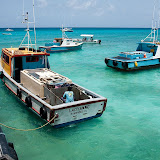
So in the end, why should anyone go to Barbados? Of course there’s the usual Caribbean island setting, with white sand, palm-fringed beaches with tranquil azure waters and abundant sunshine that are enough to attract planeloads of people (and I don’t think I could have written more clichés in one single sentence…). But Barbados has a lot more to offer than that. Besides the popular western and southern typical Caribbean beaches, the island has a varied terrain that includes gentle hills in the central region dotted with sugar plantations and botanic gardens, and the unusual eastern coast, dramatic, rugged and arguably the best place to surf in the Caribbean.
Barbados is also a place that caters to visitors in any budget range, from backpackers to celebrities. Locals are friendly and you can easily mingle with them just by going to Accra beach or the famous fish fry party in Oistins on Fridays and Saturdays, where you can dance to Caribbean rhythms from sunset to well past midnight. And if that wasn’t enough, you can meet a different kind of local inhabitant through a close encounter of the turtle kind, or be swum over by schools of fish as you snorkel or dive.
Before the trip, I had thought that 4 days would be enough to cover the island, but they weren’t. Mostly I missed central and northern Barbados, and didn’t have enough time to explore the eastern coast well. But that may give me a reason to go back someday. Now check out the photos and see if they don’t make you feel like going there.
Tuesday, May 26, 2009
Time Warps and Bad Tunes
My flight back home was in early afternoon so I didn’t have time to do much. I wanted to check out Silver Sands in the south coast, a place known as a good spot for kite and windsurfing. However, I missed the spot (Barbados does need better signage) and ended up on Enterprise beach, considered one of the best on the island. Enterprise beach has a shallow little crescent that seems to be favored by families with children and people who can’t swim. Even some adults bring buoys, which to me is puzzling because I can’t imagine anyone drowning in that shallow water. But what really caught my eye as totally out of place on that beach were the vain women who came with shower caps! I had to blink twice to make sure I wasn’t seeing things because that was something I had never seen before other than in photos from the 50’s.
Some of you may probably be wondering why I haven’t said a word about Bridgetown, the island’s capital. I did go there, but it’s such a crowded and hectic place that I really didn’t think there’d be anything attractive to explore there. I used Bridgetown mostly as a transportation hub as I was moving around the island. There are essentially 3 modes of public transportation in Barbados. The official is the Barbados Transport Board bus, blue with a yellow stripe. All is prim and proper, you pay as you board and need to have exact change. The second is a yellow with a blue stripe minibus, where you travel to the loud sound of whatever the driver is listening to, usually R&B or hip-hop (the rocker in me tried to avoid these as much as I could). And finally, there are the white minivans that can carry about 10 people. They vary widely and I took a colorful one today that had a DVD player and I had the immeasurable “pleasure” of listening to and watching the video “Trapped In The Closet” by R. Kelly at top volume. If you’ve never listened to this song, please do (or at least check out the words). It’s the tackiest thing I’ve heard in a long time, and the video was so cheesy that I was just laughing the whole trip through. R. Kelly’s music is so bad, so bad that it kind of becomes fascinating…a bit like a Mexican soap opera.
And speaking of songs, there’s one I’ve been listening to a lot lately – Crack The Shutters by Snow Patrol. It’s one of those songs that’ll put you in the mood (if you know what I mean) and is original, without beaten clichés. Just imagine the whole scene as you listen to the song and I bet you’ll like it. Plus, there’s something really sexy about singer Gary Lightbody’s Irish accent. Oh, God…now I need a cold shower!
Some of you may probably be wondering why I haven’t said a word about Bridgetown, the island’s capital. I did go there, but it’s such a crowded and hectic place that I really didn’t think there’d be anything attractive to explore there. I used Bridgetown mostly as a transportation hub as I was moving around the island. There are essentially 3 modes of public transportation in Barbados. The official is the Barbados Transport Board bus, blue with a yellow stripe. All is prim and proper, you pay as you board and need to have exact change. The second is a yellow with a blue stripe minibus, where you travel to the loud sound of whatever the driver is listening to, usually R&B or hip-hop (the rocker in me tried to avoid these as much as I could). And finally, there are the white minivans that can carry about 10 people. They vary widely and I took a colorful one today that had a DVD player and I had the immeasurable “pleasure” of listening to and watching the video “Trapped In The Closet” by R. Kelly at top volume. If you’ve never listened to this song, please do (or at least check out the words). It’s the tackiest thing I’ve heard in a long time, and the video was so cheesy that I was just laughing the whole trip through. R. Kelly’s music is so bad, so bad that it kind of becomes fascinating…a bit like a Mexican soap opera.
And speaking of songs, there’s one I’ve been listening to a lot lately – Crack The Shutters by Snow Patrol. It’s one of those songs that’ll put you in the mood (if you know what I mean) and is original, without beaten clichés. Just imagine the whole scene as you listen to the song and I bet you’ll like it. Plus, there’s something really sexy about singer Gary Lightbody’s Irish accent. Oh, God…now I need a cold shower!
Monday, May 25, 2009
Of Blisters and Things Past
A vacation on the beach always brings to mind images of lying in the sun, doing nothing but enjoying the sound of waves lapping on the shore. Today I woke up with a strong urge to do just that if for no other reason that I got an ugly open blister in between my toes. I admit that it was all my own undoing: two days ago I decided to put on a new pair of flip-flops in lieu of my beloved but multi-strapped Merrell, and the thing just gnawed through my skin all the way to my flesh. Of course it didn’t help that I spent a good chunk of the day yesterday with my feet in salt water…So today I woke up with a red fleshy blob that stings every time I move my big toe (don’t worry, I’m not going to post pictures of it).
But there was one place I really wanted to check out – Speightstown, called “the most evocative small town on Barbados” by my travel guide. So blister or no blister, there I went and was not disappointed. Speightstown is located on the west coast, and was the first major port and commercial center on the island during colonial times, from where ships carrying primarily sugar departed directly to Bristol in England. The colonial past is evident in the town’s architecture, a mix of still battered wooden structures and restored houses with colorful facades that give the town a lively vibe. The whole place has an air of nostalgia about it, particularly as you stroll along the pier dotted with blue old-fashioned lampposts. Speightstown doesn’t feel crowded even though it’s the second largest town in Barbados, and, best of all, has retained its character despite being located on the touristy west coast. It is a must-see on any island itinerary.
A little further up the coast, a little area called Shermans has beaches as good as the ones further down the shore, but without the crowds. If seclusion is your thing, this is the place to be.
So now I’m back at the hotel, looking at my aching open blister that’s become even redder and more swollen…Call me crazy, but it was all worth it.
But there was one place I really wanted to check out – Speightstown, called “the most evocative small town on Barbados” by my travel guide. So blister or no blister, there I went and was not disappointed. Speightstown is located on the west coast, and was the first major port and commercial center on the island during colonial times, from where ships carrying primarily sugar departed directly to Bristol in England. The colonial past is evident in the town’s architecture, a mix of still battered wooden structures and restored houses with colorful facades that give the town a lively vibe. The whole place has an air of nostalgia about it, particularly as you stroll along the pier dotted with blue old-fashioned lampposts. Speightstown doesn’t feel crowded even though it’s the second largest town in Barbados, and, best of all, has retained its character despite being located on the touristy west coast. It is a must-see on any island itinerary.
A little further up the coast, a little area called Shermans has beaches as good as the ones further down the shore, but without the crowds. If seclusion is your thing, this is the place to be.
So now I’m back at the hotel, looking at my aching open blister that’s become even redder and more swollen…Call me crazy, but it was all worth it.
Sunday, May 24, 2009
Sun, Surf, Sand and Soccer Balls
My first stop today was Bathsheba on the eastern coast of Barbados. This coast faces the Atlantic and is very different from the western coast I visited yesterday: it doesn’t see many tourists, perhaps because waves are non-stop and undercurrents are strong, making it a dangerous spot for swimming. It is great for surfing, though: waves get big from August to March, and every November, there is an international surfing competition at Soup Bowl, the most popular point in Bathsheba. The beaches here are very unique, with huge limestone boulders jutting out of sea and sand, and inshore coral reefs spreading out all the way to the sand, forming tide pools where people soak in for hours.
Bathsheba’s scenery is pretty dramatic and it’s worth taking the path on the hill that runs alongside the beach to get a bird’s eye view of the rocky shores below, some of which are totally deserted. The path starts to the south of the picnic area, wide and flat at first, but getting narrower and steeper as you go, until it gets to a spot that looks impassable. I was told you could go all the way to Bath beach, some 2.5 miles (4 km) away, but I gave up when the path became too steep and slippery, about 2/3 of a mile (1 km) in.
My next stop was Crane beach, adjacent to the Crane Beach Hotel, reputedly one of the best beaches on the island, and rated as one of the ten best beaches in the world by Lifestyle of the Rich and Famous. The beach is small but quite charming, lined with palm trees, white sand so soft you barely feel it under your feet, multi-hued clear waters and moderate waves that make it a popular spot for bodyboarding. About a third of the beach is taken over by blue lounge chairs and umbrellas for hotel guests, while private vendors rent chairs and umbrellas on the other 2/3 of the beach. It was relatively crowded today, with dozens of people cavorting in the water or sunning like lizards on the sand. The beach is indeed a must on any visit to Barbados, but if I was filthy rich and famous, I’m sure I’d want some more seclusion…
My last beach of the day was Accra, the most crowded and developed I’ve seen on the island so far. Parking is easy, and the beach is lined with stalls selling clothing, crafts and drinks. Its popularity is due to easy accessibility and its location, right in the main tourist area. It was my least favorite beach here so far, if for no other reason that I’d rather not have soccer balls zipping around me when I’m trying to chill out. So if you ever come to Barbados, skip Accra Beach…there’s many better ones elsewhere.
Bathsheba’s scenery is pretty dramatic and it’s worth taking the path on the hill that runs alongside the beach to get a bird’s eye view of the rocky shores below, some of which are totally deserted. The path starts to the south of the picnic area, wide and flat at first, but getting narrower and steeper as you go, until it gets to a spot that looks impassable. I was told you could go all the way to Bath beach, some 2.5 miles (4 km) away, but I gave up when the path became too steep and slippery, about 2/3 of a mile (1 km) in.
My next stop was Crane beach, adjacent to the Crane Beach Hotel, reputedly one of the best beaches on the island, and rated as one of the ten best beaches in the world by Lifestyle of the Rich and Famous. The beach is small but quite charming, lined with palm trees, white sand so soft you barely feel it under your feet, multi-hued clear waters and moderate waves that make it a popular spot for bodyboarding. About a third of the beach is taken over by blue lounge chairs and umbrellas for hotel guests, while private vendors rent chairs and umbrellas on the other 2/3 of the beach. It was relatively crowded today, with dozens of people cavorting in the water or sunning like lizards on the sand. The beach is indeed a must on any visit to Barbados, but if I was filthy rich and famous, I’m sure I’d want some more seclusion…
My last beach of the day was Accra, the most crowded and developed I’ve seen on the island so far. Parking is easy, and the beach is lined with stalls selling clothing, crafts and drinks. Its popularity is due to easy accessibility and its location, right in the main tourist area. It was my least favorite beach here so far, if for no other reason that I’d rather not have soccer balls zipping around me when I’m trying to chill out. So if you ever come to Barbados, skip Accra Beach…there’s many better ones elsewhere.
Saturday, May 23, 2009
Miserable Failures and Shameless Shortcuts
Today I took a snorkeling tour on the West Coast of Barbados on a 60-foot catamaran that glides very smoothly. I had this tour in mind for a while and ended up buying a waterproof case for my point-and-shoot camera last month to be able to use it here. The boat usually takes 30 people, but there were only 18 on board today, which left plenty of space for everyone.
On the way to our first stop, we passed the huge Sandy Lane Luxury Golf and Spa Resort, where Tiger Woods had his wedding ceremony back in 2004, and where the cheapest room goes for $1,000 per night in low season. Reservations, anyone? It took us almost one hour to get to the first stop – Mt. Standfast, the site where hawksbill turtles congregate. I was pretty excited. I got my little camera ready in its waterproof case, donned the mask, jumped in the sea and…found out that I was swallowing a lot of water. Problem is, I hadn’t snorkeled in ages and had obviously forgotten how to properly fit the mouthpiece. To compound my problems, the Barbadian waters apparently are not very salty, which makes floating harder, so every time I tried to adjust the mask, I started to sink and ended up swallowing more water. It was pathetic, I wanted to slap myself. My only consolation is that none of my friends was there to witness this deplorable performance. But in spite of my mounting frustration, it was absolutely thrilling when a turtle just glided by right underneath me. People usually get too excited and try to swim after them, but I found that if I just tried to stay put and let them do their thing, they’d eventually get close. Unfortunately, I still hadn’t managed to deal with the camera in the water and couldn’t get a single photo. And I just wanted to slap myself again.
Next we went to the Marine Reserve in Holetown, an area with a manmade shipwreck and hundreds of fish. This time, I wanted to make my life easier and did something utterly shameful – I put on a floatation vest. Laugh, but it made a world of difference because then I didn’t have to worry about sinking anymore, and could focus on getting some shots. But little did I know that there was another catch: when you’re using a point-and-shoot underwater, you can’t really see what you’re photographing. It was the most frustrating photographic experience I’ve ever had…pointing the camera to what I was hoping was the right spot while bobbing on the water, all the time thinking that I’d end up with an utterly blurry mess. So I did manage to take some pictures, but I didn’t even want to look at them for fear I’d have to toss them all. I finally looked at them when I returned to the hotel at the end of the day, and to my surprise, some came out fairly decent. And this whole experience gave me a newfound respect for underwater photographers.
After the snorkel tour I decided to go to Paynes Bay on the west coast of the island, reputedly one of the prettiest. Paynes Bay is actually a series of crescent beaches linked to each other and lined with resorts, a place where you can rent hobbie cats or jet skis. The beaches are indeed charming and on one of them there was a wedding party with bride and groom parading on the sand at the request of the videographer. At one point, the videographer said to the groom: “Don’t you want to carry your wife?” The groom said nothing, but his face screamed “Are you out of your mind?!” Ah, love is a many splendored thing!
On the way to our first stop, we passed the huge Sandy Lane Luxury Golf and Spa Resort, where Tiger Woods had his wedding ceremony back in 2004, and where the cheapest room goes for $1,000 per night in low season. Reservations, anyone? It took us almost one hour to get to the first stop – Mt. Standfast, the site where hawksbill turtles congregate. I was pretty excited. I got my little camera ready in its waterproof case, donned the mask, jumped in the sea and…found out that I was swallowing a lot of water. Problem is, I hadn’t snorkeled in ages and had obviously forgotten how to properly fit the mouthpiece. To compound my problems, the Barbadian waters apparently are not very salty, which makes floating harder, so every time I tried to adjust the mask, I started to sink and ended up swallowing more water. It was pathetic, I wanted to slap myself. My only consolation is that none of my friends was there to witness this deplorable performance. But in spite of my mounting frustration, it was absolutely thrilling when a turtle just glided by right underneath me. People usually get too excited and try to swim after them, but I found that if I just tried to stay put and let them do their thing, they’d eventually get close. Unfortunately, I still hadn’t managed to deal with the camera in the water and couldn’t get a single photo. And I just wanted to slap myself again.
Next we went to the Marine Reserve in Holetown, an area with a manmade shipwreck and hundreds of fish. This time, I wanted to make my life easier and did something utterly shameful – I put on a floatation vest. Laugh, but it made a world of difference because then I didn’t have to worry about sinking anymore, and could focus on getting some shots. But little did I know that there was another catch: when you’re using a point-and-shoot underwater, you can’t really see what you’re photographing. It was the most frustrating photographic experience I’ve ever had…pointing the camera to what I was hoping was the right spot while bobbing on the water, all the time thinking that I’d end up with an utterly blurry mess. So I did manage to take some pictures, but I didn’t even want to look at them for fear I’d have to toss them all. I finally looked at them when I returned to the hotel at the end of the day, and to my surprise, some came out fairly decent. And this whole experience gave me a newfound respect for underwater photographers.
After the snorkel tour I decided to go to Paynes Bay on the west coast of the island, reputedly one of the prettiest. Paynes Bay is actually a series of crescent beaches linked to each other and lined with resorts, a place where you can rent hobbie cats or jet skis. The beaches are indeed charming and on one of them there was a wedding party with bride and groom parading on the sand at the request of the videographer. At one point, the videographer said to the groom: “Don’t you want to carry your wife?” The groom said nothing, but his face screamed “Are you out of your mind?!” Ah, love is a many splendored thing!
Friday, May 22, 2009
There's Always A First Time...
Traveling is always about novelties and today was a day of many firsts. For starters, I made it to JFK in 35 minutes versus the usual 1 hour. It was a record and I loved it. Just wish it was always like this. But the second first I’d rather have skipped: shortly after I got in the Air Train to go from the airport parking lot to the terminal, a woman started throwing up in the car I was in. Charming…which made me think of another item to add to my packing list: a plastic bag (not that I’m planning on puking around but you never know…).
As is common during holidays, the flight was packed to the gills, and as much as I love traveling, this thing of check-in, security, boarding, unboarding, immigration, etc. is a pain. Wish I could do like Star Trek and just go “Beam me up, Scotty” to end up wherever I wanted. But to be fair, the flight was good, 4-hour direct to Barbados and the flight attendants were noticeably friendlier than usual.
The next novelty today was the captain’s request once we landed: “Please lower the window shades and open air vents to the maximum to keep the aircraft cool.” Now, that made me think I had landed in sizzling hell and I almost started to sweat just thinking about it. But all was good once I got off the plane – the temperature was a balmy 82˚F (28˚C). Some of you will say that it was basically the same temperature as in NY, but there’s a huge difference: those gorgeous Caribbean beaches with white sand and clear turquoise waters. Once you set foot on one of these beaches, that soft sand makes you feel relaxed, the sound of the crashing waves makes you breathe easier. It’s heavenly!
I ended up leaving my hotel in St. Lawrence Gap at almost 4 pm, so I decided to not go very far and picked Oistins, some 15 minutes away. The town is essentially a fishing village where you find a fish market and hulls of several boats, but there’s a twist: on Fridays and Saturdays, it becomes the center of one of the biggest parties on the island, with several colorful stalls selling drinks and local food (the main staple is fish but there’s also options for vegetarians like me, though nothing very appetizing), a couple dozen vendors selling crafts, and a DJ spinning music that includes reggae and calypso. It attracts locals and tourists alike, and the music starts right after sunset.
Oistins also provided me with another first today – an encounter with hawksbill turtles, a critically endangered species due to overharvesting for their shell, meat and eggs. A few of them hang out around the pier in town because fishermen and tourists feed them fish, and I saw two circling the waters around sunset. They are usually found near tropical reefs and their characteristic is a narrow head and a large beak that resembles that of a hawk. They measure between 30 to 39 inches (75 to 100 cm) and weigh from 150 to 220 lbs. (68 to 100 kg). In Barbados, it is illegal to catch any species of sea turtle, or possess any turtle product, and infringement carries penalties of up to $25 thousand dollars and/or 2 years in prison.
But turtles were not the only animal species I encountered today. Actually I just found a small crab in my room (and I can imagine some of my friends screaming in terror at the sight of one…). The hotel is located right on the beach and I saw several moving about when I checked in earlier. This one was really small (about the size of the palm of my hand) and must have come in when the door was open.
As is common during holidays, the flight was packed to the gills, and as much as I love traveling, this thing of check-in, security, boarding, unboarding, immigration, etc. is a pain. Wish I could do like Star Trek and just go “Beam me up, Scotty” to end up wherever I wanted. But to be fair, the flight was good, 4-hour direct to Barbados and the flight attendants were noticeably friendlier than usual.
The next novelty today was the captain’s request once we landed: “Please lower the window shades and open air vents to the maximum to keep the aircraft cool.” Now, that made me think I had landed in sizzling hell and I almost started to sweat just thinking about it. But all was good once I got off the plane – the temperature was a balmy 82˚F (28˚C). Some of you will say that it was basically the same temperature as in NY, but there’s a huge difference: those gorgeous Caribbean beaches with white sand and clear turquoise waters. Once you set foot on one of these beaches, that soft sand makes you feel relaxed, the sound of the crashing waves makes you breathe easier. It’s heavenly!
I ended up leaving my hotel in St. Lawrence Gap at almost 4 pm, so I decided to not go very far and picked Oistins, some 15 minutes away. The town is essentially a fishing village where you find a fish market and hulls of several boats, but there’s a twist: on Fridays and Saturdays, it becomes the center of one of the biggest parties on the island, with several colorful stalls selling drinks and local food (the main staple is fish but there’s also options for vegetarians like me, though nothing very appetizing), a couple dozen vendors selling crafts, and a DJ spinning music that includes reggae and calypso. It attracts locals and tourists alike, and the music starts right after sunset.
Oistins also provided me with another first today – an encounter with hawksbill turtles, a critically endangered species due to overharvesting for their shell, meat and eggs. A few of them hang out around the pier in town because fishermen and tourists feed them fish, and I saw two circling the waters around sunset. They are usually found near tropical reefs and their characteristic is a narrow head and a large beak that resembles that of a hawk. They measure between 30 to 39 inches (75 to 100 cm) and weigh from 150 to 220 lbs. (68 to 100 kg). In Barbados, it is illegal to catch any species of sea turtle, or possess any turtle product, and infringement carries penalties of up to $25 thousand dollars and/or 2 years in prison.
But turtles were not the only animal species I encountered today. Actually I just found a small crab in my room (and I can imagine some of my friends screaming in terror at the sight of one…). The hotel is located right on the beach and I saw several moving about when I checked in earlier. This one was really small (about the size of the palm of my hand) and must have come in when the door was open.
Sunday, May 3, 2009
Blue Zone
I'd never heard the term "blue zone" until today: it's used to designate a place where residents have unusually long lives. And I just came across this article about the Greek island of Ikaria, where roughly 1 in 3 people reach 90 years old - http://www.npr.org/templates/story/story.php?storyId=103744881. Not surprisingly, residents lead an active life, eat lots of fruits, vegetables and olive oil, and drink herbal tea every day. Surprisingly, they don't eat much fish, even though it's an island.
The name of the island comes from Icarus, who according to Greek mythology fell into the sea nearby after his failed attempt to fly. The island is located roughly 40 km from Mykonos, but the two islands couldn't be more different. While Mykonos is a tourist magnet, renowned for intense nightlife, Ikaria remains fairly untouched by tourism and appeals more to people who favor a laid back and pristine atmosphere. And how on earth did I ever miss this place when I went to Greece?!
The name of the island comes from Icarus, who according to Greek mythology fell into the sea nearby after his failed attempt to fly. The island is located roughly 40 km from Mykonos, but the two islands couldn't be more different. While Mykonos is a tourist magnet, renowned for intense nightlife, Ikaria remains fairly untouched by tourism and appeals more to people who favor a laid back and pristine atmosphere. And how on earth did I ever miss this place when I went to Greece?!
Tuesday, April 28, 2009
Pigs Can't Fly, But Viruses Can
This is not the year of the pig, but the rapid spread of the swine flu will definitely put pigs as one of the top stories of 2009. And if we thought 2008 was a bad year…well, 2009 so far is not turning out to be much better.
The flu has already reached New Zealand and Israel and in the words of the assistant director-general of the World Health Organization (WHO) “In this age of global travel, where people move around in airplanes so quickly, there is no region to which this virus could not spread”.
The epicenter seems to be Mexico and this is very bad news for the country. Tourism is the third most important economic sector in Mexico, generating roughly 9% of its GDP. The vast majority of visitors come from the US, but now with the flu the number of visitors is expected to drop significantly, especially since the US government is advising against nonessential travel to Mexico.
One of my co-workers had a vacation scheduled for Acapulco starting next weekend, and she cancelled her plans yesterday after growing concerns about the flu (plus there was an earthquake in Acapulco yesterday afternoon…). The decision to cancel a trip or not has a lot to do with how much you know about the situation and I find that in health related matters, the WHO website is very helpful - http://www.who.int/en/. It has up-to-date info and FAQs, and probably at some point they’ll have a table indicating how many cases of swine flu have been confirmed where and the number of fatalities in each country (they did this for SARS back in 2003 and based on that tracking, we went ahead with a trip we had scheduled for Thailand in April of that year).
But with or without epidemics or pandemics, there are some precautions that should be taken whenever you go abroad. My favorite is “If you can cook it, boil it or peel it, you can eat it…otherwise forget it!”. When traveling, I only drink bottled water, do not take ice and in general only drink bottled juices. Plus, it’s worth checking the Traveler’s Health section of the Centers for Disease Control website at http://www.cdc.gov/ to find out the major health risks in the place you’re traveling to.
The flu has already reached New Zealand and Israel and in the words of the assistant director-general of the World Health Organization (WHO) “In this age of global travel, where people move around in airplanes so quickly, there is no region to which this virus could not spread”.
The epicenter seems to be Mexico and this is very bad news for the country. Tourism is the third most important economic sector in Mexico, generating roughly 9% of its GDP. The vast majority of visitors come from the US, but now with the flu the number of visitors is expected to drop significantly, especially since the US government is advising against nonessential travel to Mexico.
One of my co-workers had a vacation scheduled for Acapulco starting next weekend, and she cancelled her plans yesterday after growing concerns about the flu (plus there was an earthquake in Acapulco yesterday afternoon…). The decision to cancel a trip or not has a lot to do with how much you know about the situation and I find that in health related matters, the WHO website is very helpful - http://www.who.int/en/. It has up-to-date info and FAQs, and probably at some point they’ll have a table indicating how many cases of swine flu have been confirmed where and the number of fatalities in each country (they did this for SARS back in 2003 and based on that tracking, we went ahead with a trip we had scheduled for Thailand in April of that year).
But with or without epidemics or pandemics, there are some precautions that should be taken whenever you go abroad. My favorite is “If you can cook it, boil it or peel it, you can eat it…otherwise forget it!”. When traveling, I only drink bottled water, do not take ice and in general only drink bottled juices. Plus, it’s worth checking the Traveler’s Health section of the Centers for Disease Control website at http://www.cdc.gov/ to find out the major health risks in the place you’re traveling to.
Tuesday, April 14, 2009
The World At The Doorstep
 One of the cool things about NYC is that you find pieces of the world scattered all throughout the city. This past weekend in Central Park, I found a large group of people performing the Morris Dance, an English dance from somewhere around the 15th century. Its origins are traced to Spain, around the time when the Moors were driven out of the country. In celebration, a pageant called Moresca was created and dances with similar names multiplied throughout Catholic Europe around that time.
Nowadays, there are 6 styles of Morris dancing and the one I saw was the Cotswold Morris, which is normally danced with handkerchiefs. Groups of 4 to 6 people perform steps and jumps to the sound of violins, accordions and little bells tied to the dancers' legs, and though their performance was more stamina than skill, it was really cool to see how much they were enjoying doing it.
Sunday, March 29, 2009
The Worst In Men

I always feel connected to the places I’ve visited and today I woke up to an article on CNN about the trial of a former Khmer Rouge leader in Cambodia - http://www.cnn.com/2009/WORLD/asiapcf/03/29/cambodia.tribunal/index.html. Kaing Guek Eav, known as Duch, is 66 years old, a former math teacher and a born-again Christian. When the Khmer Rouge was in power, he led S-21, a high school that had been converted into a prison, and became the largest center of detention and torture in Cambodia. From 1975 to 1979, over 17,000 detainees passed through it, but only 12 survived. The place is now the Tuol Sleng Museum and is one of the most somber places you will ever visit in your life. Some of the first exhibits are former classrooms where detainees were chained to iron beds, bloodstains seen on the floor to this day. On the walls are photos of prisoners as they were found in those rooms when Vietnamese forces liberated the country. It’s clear that all of them had been viciously tortured. Overall, it’s estimated that between 1.4 and 2 million Cambodians died during the Khmer Rouge regime either from executions, starvation or disease. That’s equivalent to 20% to 30% of the population at the time.
The numbers are staggering, but the most vivid impression that Tuol Sleng leaves on you is the savagery. The Khmer Rouge was a paranoid and self-serving regime that wanted to cling to power at any cost and used cruel methods to purge anyone thought to be against their dogmas. To learn more about this heinous regime, go to http://en.wikipedia.org/wiki/Khmer_Rouge. Their brutality crippled Cambodia for years, and the scars can be seen to this day, from the overall poor standard of living to countless amputees and elderly who carry on their faces signs of the horrors that they saw. Kaing Guek Eav is the first Khmer Rouge leader to stand trial and hopefully this will start to bring justice and closure to the country. Cambodians are an admirable people - they have seen the worst of humanity but that hasn’t hardened them; they are some of friendliest people I’ve met. And my hope is that one day when I go back, the country will have fully left behind the ordeals of the past 35 years.
Thursday, March 5, 2009
Engulfed by Sand
 February 2009
After Canoa Quebrada, we headed to Jericoacoara on the coast northwest of Fortaleza, known as Sunset Coast. Jericoacoara became a national park in 2002, and the village, nicknamed Jeri, has only 5 streets and a population of about 3,000. Jeri is probably the most secluded beach in the state, and in some aspects, has retained traits of the fishing village it once was: there are no roads to Jeri, the streets remain unpaved, there’s no ATM, there’s still no street lighting even though electricity reached the village in 1998 and you may still wake up to a toad croaking at your doorstep (not to worry, terrified ladies, they don't bite).
Getting to Jeri is not easy – the paved road ends 12 miles (20 km) away, and from there it’s a one-hour ride through dirt roads and sand paths. The greenest way to get to Jeri is to leave your car in Jijoca, the closest town, and hop on the back of a truck for the bumpy ride. And bumpy it is: potholes abound, kids throw up, your body is constantly thrown against the sides of the truck so much so that one of the passengers said that she’d rather work for free than take this ride daily. And now you’re thinking: why is she recommending this ride from hell?! Here’s why: we arrived on the last day of carnival and there were dozens of cars in the village. Besides the inevitable jams in a place so small, it was absolutely dreadful to have to navigate the streets through countless cars and their fumes. It took away some of the character of the place. Once carnival was over and most of the cars were gone, Jeri was transformed and its idyllic qualities just mushroomed. The new mayor has plans to ban cars from the village and I’m all for it.
Jeri has been named one of the 10 best beaches in the world by The Washington Post and Globe Trekker and it’s easy to see why. Jeri has a tropical climate with temperatures ranging from 72F (22C) to 95F (35C) year round, and boasts stunning scenery of countless dunes interspersed by lagoons. The most frequented dune, called Sunset, is right at the southern end of the main beach where dozens of people gather at the end of the day. Activities abound: sandboarding, surf, windsurfing, kitesurfing, horse riding, and buggy rides, the most popular of all.
There is quite a number of tours that you can take by buggy in the region and if you get a skilled driver, you won’t get stuck in sand. We took a trip to Tatajuba, 11 miles (18 km) away through beaches, rivers, mangroves and dunes. Tatajuba has an interesting story – a number of years ago, the town had to relocate because it was being taken over by dunes, some of which can move 100 feet (30 meters) per year. The town now sits near the tallest dune in the region - Enchanted Dune, standing at 260 feet (80 m). The dune is so big that it doesn't move and got this name because locals think there's something special about it - some claim to see blinking lights in the sky around it occasionally (cue Twilight Zone theme).
Tatajuba is how Jeri looked a decade ago: a fishing village where some of the houses are not even plastered. There are just a handful of guesthouses now, but word is that foreigners are already buying land so Tatajuba may become the new Jeri in a few years. The biggest draw in town is the lagoon, where you can pick a fish from the day’s catch for lunch, then laze the afternoon away in one of the hammocks above the water. Doesn’t get any more heavenly than that.
So what next? I don’t know. My travels tend to have accidental themes, and the one this year seems to relate to sand (desert in Jordan, dunes in Brazil). Maybe I’ll finally visit the Namibian dunes. But only time will tell…
Wednesday, March 4, 2009
Faking It
 February 2009
We were in Brazil the week of carnival, which is celebrated differently in each part of the country. In Rio, there’s the samba parade; in Salvador, huge trucks with music performers on board cruise the streets followed by countless dancing foliões, as carnival revelers are called; in a city called Rosário in northern Brazil, the highlight is a contest where the best costumed donkey and cart win a highly coveted prize – a 21-inch TV. Canoa Quebrada didn’t have much of a carnival, but the neighboring town, Majorlandia, was the epicenter of all celebrations in the region: a stage was set up in the main area in town and throngs of foliões kept jumping to the sound of music. Now, I’m a rock & roll gal, samba is not my thing and, to be honest, those hopping foliões looked just like a bunch of deranged kangaroos to me…
But carnival always has its surprises – one night we were having dinner and heard a band further down the street playing not only samba, but several other Brazilian rhythms such as baião, forró, axé and frevo. They were playing very well and when we went to check them out, we found out that all band members were Scandinavian! Yet another Twilight Zone moment. Even more bizarre, there were half a dozen Scandinavian women dancing samba. I’ll say this upfront: I can’t dance samba; I can only fake it. And the Scandinavian gals were also faking it. But I have to admit - those milky white blond things were faking it better than I ever could…
Tuesday, March 3, 2009
Vampires on Broadway
 February 2009
Still pale as ghosts, we headed to the coast southeast of Fortaleza, known as Sunrise Coast. Our main destination was Canoa Quebrada, which translates as Broken Canoe. It used to be a fishing village and had no electricity until the 1990s, but is now one of the most popular beaches in Ceará. I was greeted with a Twilight Zone moment when I got there…a bunch of scantily clad people parading in front of a symbol of Islam?! I’m sure that my fellow Broken Canoers don’t have a clue that the symbol they chose for their town – the crescent moon and star – is an unofficial symbol of Islam. So hopefully this won’t end in a jihad.
The most distinctive features of Canoa Quebrada are falésias, steep reddish sand cliffs that rise from the beach, tall enough to be used as launch pads by paragliders. Along their flanks on the beach, fishermen park their jangadas (one-sail vessel typical of the Brazilian northeast) and barracas (oversized stalls) offer food, drinks, music and occasionally a late night beach party. Most barracas try to make life easier for foreigners and have menus in both Portuguese and English, although it may take a foreigner a while to figure out that “Fish In Tile” is actually grilled fish. And if you think Canoa Quebrada is just a place for beach bums who want to get a tan while having beer with fish or shrimp, think again. Besides paragliding, the strong winds that blow from July to December are perfect for wind and kitesurfing.
In yet another bout of “gringuice”, I forgot how strong sun in the tropics can be: you can actually get sunburned even when the sun is not fully out. Of course we forgot all about it and on our first morning there, we went for a stroll on the beach and didn’t put sunblock because it was partially cloudy. By the end of the day, my husband looked like a roasted red pepper and I looked like I had shrimp on my shoulders. The following day, pepper and shrimp were so sunburned that we spent the day scurrying from shade to shade along Broadway, the main street, like two Nosferatus on fire.
Only one thing made me get out in the sun that day: half a dozen donkeys grazing on an isolated beach. Most were wary of us when we approached, but one was curious and she actually took to me after I gave her a rub at the base of her neck. Next thing I knew, she was nesting her head against my hip. At that moment, I had an epiphany: I could have a career as a donkey whisperer…
Monday, March 2, 2009
Homeland Gringa
 February 2009
I confess I felt a bit like a gringa when I landed in Fortaleza on this last trip. For starters, I had to constantly remind myself that I was supposed to speak Portuguese, and it took me about a day to stop greeting people in English. As I looked around, I felt even more like a gringa - I didn’t have a tan and my northern winter pallor stuck out like a sore thumb. Then my outfit… I wasn’t wearing tennis shoes and socks to the beach, but I definitely didn’t have Havaianas like everyone else. And before any of my compatriots throw stones at me for my Havaianaslessness, here’s the reason: Havaianas are perfect for normal feet; mine unfortunately are as flat as a duck’s and the Havaianas-flat feet combination is just painful when I’m on my feet for 9+ hours a day. So far, I’ve found only one beach sandal that makes my feet happy all day – Merrell. It hugs my feet so snugly that it feels like walking on clouds. The only problem is that it has countless straps and since I spend the whole day outdoors when on vacation, my feet get tanned but the skin under the straps doesn’t. And now my feet look like maniacal zebras…
But on other things I fit right back in. I went straight for my favorite drink, something I miss a lot in NY – coconut water. And before anyone says that there is coconut water in the US too, I’ll say, yes, there is…it comes in a can, usually with added sugar. The one in Brazil comes right off the fruit – punch a hole, throw a straw in and that’s it. Doesn’t get any more natural than this.
I chose the northeastern state of Ceará because it reputedly has some of the best beaches in Brazil. The capital Fortaleza was founded by the Dutch in the 17th century and is now the 5th largest city in the country with a population of 2.5 million. It has the typical problems of a metropolis: pollution, hectic traffic and petty theft – not as bad as Rio, but locals kept warning us, “gringos”, to watch out for pickpockets as we photographed around the city.
The most popular beach in Fortaleza is Praia do Futuro, on the eastern part of town. Several beach clubs have taken over stretches of sand, offering food, drinks, chairs and beach umbrellas. The fancier is Croco Beach where you also find a kiddie pool and water slide, a sauna, an ATM, a beauty salon, a massage parlor, the inevitable gift shop and a stage for occasional shows. It’s perfect for families, but unless you like stumbling over endless beach bums and plastic chairs on your way to the water, you’re better off somewhere less crowded. Just watch out for pickpockets.
I’m not into seafood, but there’s one thing in Fortaleza I thought was pretty cool and a must for seafood lovers: the fish market at the eastern end of Avenida Beira-Mar. You pick your shrimp (R$15-30/kg or $2.80-5.70/lb), take it to the makeshift kitchen on the corner and they’ll fry it for you. You can then sit at one of the little tables on the sand and watch waves come and go while savoring your fresh appetizer. Doesn’t get any sweeter than this.
Tuesday, February 17, 2009
On The Road Again
I’ve been trying to bring this travelogue up to date, but I confess that my mind has been elsewhere these past couple days. The days seem brighter, the air seems lighter. No, it’s not the coming of spring; it’s still freezing here in northeastern US. It’s just that I’m taking off again tomorrow, this time to a most unexpected destination – northeastern Brazil. I know, I know, I haven’t traveled around my home country in ages, but that’s one of the things that happen when you move to another country – every time you go back, you end up spending time with your family. But since relatives came to visit me late last year, that’s a good chance to go to places other than Rio, where my family lives. So I’ll be landing in Fortaleza, Ceará, after what will likely be a grueling 20-hour trip.
From there, beaches, beaches, more beaches and…whatever else happens. But that’s part of the fun – finding out what comes your way in a new place.
See ya!
From there, beaches, beaches, more beaches and…whatever else happens. But that’s part of the fun – finding out what comes your way in a new place.
See ya!
Saturday, February 14, 2009
Coveted Beauty
 June 2008
Croatia has a long history, and a turbulent one. Having been part of the Roman Empire, areas of the country now known as Croatia passed by the hands of the Byzantine Empire, the Kingdom of Hungary, the Ottoman Empire, the Austrian Hapsburg Empire, the Republic of Venice, Napoleonic France, and finally Yugoslavia. Croatia declared independence in 1991, but Croats had to fight a bloody war against the Serbs of former Yugoslavia. Dubrovnik, one of Croatia’s most well known cities, was heavily shelled during the war and here are some scenes of the attacks - http://www.youtube.com/watch?v=sU0JPXUmg44, which left Dubrovnik under siege for seven months.
Dubrovnik has been called “heaven on earth” by George Bernard Shaw but is commonly known as “Pearl of the Adriatic”, as Lord Byron named it. Call it whatever you want, but one thing is certain: Dubrovnik is enchanting. Its Old Town has been designated a UNESCO World Heritage Site and after severe damages caused by the independence war, it underwent a major restoration program. By 2005, most of the work had been completed.
The Old Town is the highlight of any visit to Dubrovnik. It is tiny, fully pedestrianized and the main sights can be visited in one day, which is what legions of cruise ship passengers do. In my opinion, though, one day is not nearly enough to discover all that Dubrovnik has to offer.
If you come by land, your entry point to the Old Town will likely be Pile Gate, a massive stone structure reached by a stone bridge. Inside the gate, there are usually street musicians performing throughout the day. If you come in summer, you’ll immediately realize that Dubrovnik has a Mediterranean climate and you’ll likely be drenched in sweat by the time you’re done crossing the gate. Once inside though, there are two things to refresh you: one is the Onofrio Fountain with its potable cool water and a little further down the street, an ice cream shop with creamy flavors that just melt in your mouth. My favorite was cinnamon.
Placa is the main street in the Old Town and links Pile Gate to the Clock Tower. It’s lined with stone buildings fronted by stores and cafés, but its most striking feature is the marble pavement, which at night shines under the street lamps. A must in Dubrovnik is to walk the stone walls that encircle the city, allowing you to have a bird’s eye view of the Old Town. One of the entrances is by Pile Gate and you’ll be able to see cliffs used for sunbathing and as platforms for diving, numerous historic buildings, bright orange terracotta roofs, and the extensive Dalmatian coast. This walk around the gate will give you ideas for places to check out later, such as cafés perched above the sea or bars hidden in narrow streets. Go late in the day when it’s cooler and the light is much better.
Dubrovnik has been called “heaven on earth” by George Bernard Shaw but is commonly known as “Pearl of the Adriatic”, as Lord Byron named it. Call it whatever you want, but one thing is certain: Dubrovnik is enchanting. Its Old Town has been designated a UNESCO World Heritage Site and after severe damages caused by the independence war, it underwent a major restoration program. By 2005, most of the work had been completed.
The Old Town is the highlight of any visit to Dubrovnik. It is tiny, fully pedestrianized and the main sights can be visited in one day, which is what legions of cruise ship passengers do. In my opinion, though, one day is not nearly enough to discover all that Dubrovnik has to offer.
If you come by land, your entry point to the Old Town will likely be Pile Gate, a massive stone structure reached by a stone bridge. Inside the gate, there are usually street musicians performing throughout the day. If you come in summer, you’ll immediately realize that Dubrovnik has a Mediterranean climate and you’ll likely be drenched in sweat by the time you’re done crossing the gate. Once inside though, there are two things to refresh you: one is the Onofrio Fountain with its potable cool water and a little further down the street, an ice cream shop with creamy flavors that just melt in your mouth. My favorite was cinnamon.
Placa is the main street in the Old Town and links Pile Gate to the Clock Tower. It’s lined with stone buildings fronted by stores and cafés, but its most striking feature is the marble pavement, which at night shines under the street lamps. A must in Dubrovnik is to walk the stone walls that encircle the city, allowing you to have a bird’s eye view of the Old Town. One of the entrances is by Pile Gate and you’ll be able to see cliffs used for sunbathing and as platforms for diving, numerous historic buildings, bright orange terracotta roofs, and the extensive Dalmatian coast. This walk around the gate will give you ideas for places to check out later, such as cafés perched above the sea or bars hidden in narrow streets. Go late in the day when it’s cooler and the light is much better.
Back in town, the best thing to do is to put away your map and just get lost in the narrow streets that radiate from Placa. Discover stone houses surrounded by potted flowers, bars and restaurants with live music, talented street musicians performing around town. For such a small place, the Old Town has something for everyone and a rushed visit would be just a waste.
Wednesday, February 11, 2009
The Two Faces of Nature
 February 2008
My other destination in Kruger National Park was Satara, a savanna that attracts grazing animals and has the highest concentration of lions. But we seemed to be out of luck: on our third day in the park, we hadn’t seen any lions yet. Toward the end of that day, we stopped to photograph some birds, and as we were leaving, we saw a lioness coming down the road behind us. As soon as we turned the car, she disappeared in the tall grass. We kept looking for her, but after almost half hour, gave up and decided to leave. As we started the car, she reappeared some 40 yards ahead, crossed the road and went into the grass again. We rushed to the spot, and there she was, sitting some 20 steps away. Finally! Then I heard a rustle and that’s when I saw them rushing towards her – 3 cubs, who couldn’t be more than 3 months old. They all walked back to the road, and at some point, just lay on the pavement a few steps from our car. Even though she was clearly tired and hungry, she carefully nursed and cleaned them, not minding us at all. I couldn’t hold back tears. We stayed almost one hour with them until sunset and as we were about to leave, the lioness turned her head and looked straight into my eyes. It was a casual look, as if she was looking at someone who had always been around, someone who was part of her world. And of all the things I’ve seen and done on any trip, spending time with her and the cubs was one of the most extraordinary of all.
The following day, we were reminded why lions are such fearsome creatures as we came across a pride that had killed a buffalo earlier in the day. In the sizzling mid-afternoon temperatures, the stench of decaying flesh was almost unbearable, and on a nearby tree, a handful of vultures awaited their turn. One of the lionesses was feasting on the remains, and I’ll never forget the sound of flesh being torn by the sheer force of her jaws, a ripping sound that lingered in the stillness of the savanna. When she was done, she came towards the road and as she did so, she also looked straight into my eyes. This was the look of a predator, of someone who will stop at nothing to survive another day. I cringed against the seat. It was a chilling moment, but awe-inspiring nonetheless.
The following day, we were reminded why lions are such fearsome creatures as we came across a pride that had killed a buffalo earlier in the day. In the sizzling mid-afternoon temperatures, the stench of decaying flesh was almost unbearable, and on a nearby tree, a handful of vultures awaited their turn. One of the lionesses was feasting on the remains, and I’ll never forget the sound of flesh being torn by the sheer force of her jaws, a ripping sound that lingered in the stillness of the savanna. When she was done, she came towards the road and as she did so, she also looked straight into my eyes. This was the look of a predator, of someone who will stop at nothing to survive another day. I cringed against the seat. It was a chilling moment, but awe-inspiring nonetheless.
Among Giants
 February 2008
People often find my choices of travel destination unconventional, to say the least. All I can say is that traveling to me is about discovery, a chance to leave the mundane behind, and check into a world I’ve never seen, that hopefully will bring me something unique. And places like Kruger National Park in South Africa offer the opportunity to do just that. More than a change of setting, Kruger was a change of habits and pace: I had to wake up everyday at 5 am to be able to catch animals at the peak of their activity; I had to forego things I’ve come to take for granted, such as TV and internet, and realized I didn’t miss them a bit; and, above all, I had to learn to take it slow, to sit still and welcome whatever came my way. Sometimes nothing happened. But when something did happen, it was a thrill, that one-in-a-lifetime moment that I hope to keep for the rest of my life.
Kruger is within easy access from Johannesburg, several nearby car rental agencies offer affordable rates and its accommodations cater to all budgets, ranging from campsites to luxury suites with private viewing decks. At nearly 2 million hectares, Kruger is vast so unless you have unlimited time, it’s best to focus on a few select areas. For this trip, I chose Lower Sabie and Satara.
In Lower Sabie, trees are the dominant vegetation, making it a good place to spot tall animals such as giraffes and elephants. The road margins the Sabie River, one of the few perennial in the park particularly favored by elephants. I confess that I got a bit tense on my first close encounter with them: my husband and I spotted an elephant down the road and stopped the car a few feet away only to discover it wasn’t just her; there were several herds hidden in the trees and we soon found ourselves surrounded by dozens of elephants. Some of them were almost twice the size of an SUV and I started wondering what would happen if they didn’t like having us around. But I soon realized they weren’t bothered by us and we felt comfortable enough to just stay put among them as they came to or from the river, their trumpets at times stirring the air. Watching them in their slow grace is immensely soothing, and if heaven feels like anything on earth, it must feel like these moments, when you lose all sense of time and place, when you can connect to someone/something so different than yourself, when you fully live in the moment.
Kruger is within easy access from Johannesburg, several nearby car rental agencies offer affordable rates and its accommodations cater to all budgets, ranging from campsites to luxury suites with private viewing decks. At nearly 2 million hectares, Kruger is vast so unless you have unlimited time, it’s best to focus on a few select areas. For this trip, I chose Lower Sabie and Satara.
In Lower Sabie, trees are the dominant vegetation, making it a good place to spot tall animals such as giraffes and elephants. The road margins the Sabie River, one of the few perennial in the park particularly favored by elephants. I confess that I got a bit tense on my first close encounter with them: my husband and I spotted an elephant down the road and stopped the car a few feet away only to discover it wasn’t just her; there were several herds hidden in the trees and we soon found ourselves surrounded by dozens of elephants. Some of them were almost twice the size of an SUV and I started wondering what would happen if they didn’t like having us around. But I soon realized they weren’t bothered by us and we felt comfortable enough to just stay put among them as they came to or from the river, their trumpets at times stirring the air. Watching them in their slow grace is immensely soothing, and if heaven feels like anything on earth, it must feel like these moments, when you lose all sense of time and place, when you can connect to someone/something so different than yourself, when you fully live in the moment.
Wildlife tip: when you come close to an elephant, pay attention to the ears. If they’re flapping, you’re good. If the elephant looks at you with the ears wide open, just run!
Tuesday, February 10, 2009
Curse of 1,000 Weeping Dragons - The Antidote
 December 2007
Hong Kong is not only about shopping. A must-see in town is A Symphony of Lights, an 8 pm nightly light and sound show where more than 40 buildings on both sides of Victoria Harbour glow in colored lights and laser beams to the sound of music. You can watch it from either the Tsim Sha Tsui waterfront in Kowloon or the Golden Bauhinia Square in Hong Kong Island, but the coolest thing is to take the 7:30 pm harbor tour in a junk ship, which will enable you to have a 360° view of the show.
If you feel you’re becoming a shopaholic and need a reprieve from shopping malls and skyscrapers, just head to Lantau Island. Disneyland has already found its way there, but most of the island remains untouched by rabid consumerism. Lantau offers several beaches and hiking trails, but the most visited attraction is the Po Lin Monastery and the world’s largest outdoor bronze Buddha statue. Just remember to go in the morning otherwise the sun will be behind the Buddha. Maybe because we went on a Sunday, the Monastery was very active and there was a lot of incense burning. So much incense that I ended up feeling like a smoked mongrel. But if it’s true that incense is cleansing, then I probably left the monastery as clean as a hospital sink. And hopefully rid of the curse of 1,000 weeping dragons!
If you feel you’re becoming a shopaholic and need a reprieve from shopping malls and skyscrapers, just head to Lantau Island. Disneyland has already found its way there, but most of the island remains untouched by rabid consumerism. Lantau offers several beaches and hiking trails, but the most visited attraction is the Po Lin Monastery and the world’s largest outdoor bronze Buddha statue. Just remember to go in the morning otherwise the sun will be behind the Buddha. Maybe because we went on a Sunday, the Monastery was very active and there was a lot of incense burning. So much incense that I ended up feeling like a smoked mongrel. But if it’s true that incense is cleansing, then I probably left the monastery as clean as a hospital sink. And hopefully rid of the curse of 1,000 weeping dragons!
Shop Baby Shop
 December 2007
After the damp, gloomy weather in mainland China, Hong Kong welcomed us with sunny skies and temperatures in the high 60s (~20°C). It felt like a different world. And HK is indeed very different than the rest of China. On the plus side, everyone speaks English, signs are bilingual and HK is compact, saving on travel time. On the downside, HK is much more expensive than China, with costs at times comparable to those of Europe.
The main tourist area is Kowloon, a neighborhood packed with one thing that HK does have in common with mainland China – shopping malls. There are 2 main shopping areas there. One is Tsim Sha Tsui, with big and fancy malls - the largest, Harbour City, has over 700 stores, occupies a whole block and you can literally shop till you drop. It’s a black hole of consumerism, with people lining up to get into upscale stores such as Louis Vuitton and Chanel. At the other end of the shopping spectrum, there’s Mong Kok and Yau Ma Tei, both bargain hunter’s paradises where you can also shop till you drop. There you find outlets, inexpensive stores and street markets selling everything from clothing to electronic gadgets to goldfish.
The main tourist area is Kowloon, a neighborhood packed with one thing that HK does have in common with mainland China – shopping malls. There are 2 main shopping areas there. One is Tsim Sha Tsui, with big and fancy malls - the largest, Harbour City, has over 700 stores, occupies a whole block and you can literally shop till you drop. It’s a black hole of consumerism, with people lining up to get into upscale stores such as Louis Vuitton and Chanel. At the other end of the shopping spectrum, there’s Mong Kok and Yau Ma Tei, both bargain hunter’s paradises where you can also shop till you drop. There you find outlets, inexpensive stores and street markets selling everything from clothing to electronic gadgets to goldfish.
One mall that is worth going to is The Peak in Hong Kong Island, with great views of the harbor from its terrace. It’s located on Victoria Peak and the best way to get there is by The Peak Tram. The tram has been running since 1888 and climbs a steep hill all the way to the mall. Try to stay on the right side to catch some views of the harbor as you go up. The tram is very popular and lines are long, so it’s only worth taking it one-way. You can come back down by public double decker or even on foot.
Curse of 1,000 Weeping Dragons - Part II
 December 2007
Our last stop in mainland China was Guilin, and every time we mentioned that we were going there to a Chinese, he/she would get excited about it. Guilin is known as one of the most scenic cities in the country and for good reason: unlike other big cities in China, usually dominated by endless blocks of concrete buildings, Guilin offers several parks and hills as well as boat tours that glide through the Li river and the string of lakes that meander through town.
Much to our relief, it wasn’t raining when we arrived in Guilin, but it was only 6 hours until the rain found us yet again. We then went underground to the Reed Flute Cave, a place that looks right out of “Alien” and certainly the most unique sight in Guilin. Huge stalactites and stalagmites adorn the cave, highlighted by colorful lights that enhance the strange formations. There’s a catch though: you’re supposed to follow a group, therefore the lights have a timer; once the lights go off, only tour guides are able to turn them back on. So if you want to do it on your own, at times you have to wait in the dark until a group comes by. The most impressive part of the cave is the Crystal Palace of the Dragon King, a large open area centered on an underground lake. Bluish lights illuminate the walls, the still waters of the lake create a perfect mirror, and at times, it looks like an ice world rather than a cave.
Beautiful though as Guilin is, the best of the region is near Yangshuo, one hour away. It’s a famous backpacker mecca and so far high rises and shopping malls haven’t reached it. It’s around Yangshuo that you find series of karsts (limestone mountains) sitting along the banks of the Li River, stretching as far as the eye can see. Yangshuo is a place to enjoy the outdoors, either rock climbing, biking, kayaking or simply drifting on a bamboo raft to one of the nearby small villages. Our initial plan was to spend 3 or 4 days there, but, you guessed it, it was raining and would continue so for at least another 3 days. And after one week of gray skies, fog, rain and chilly temperatures, we were fed up, cut our stay short and decided to look for sunny skies. So we headed to Hong Kong, but with a heavy heart –Yangshuo is a place that will keep growing on you the longer you stay. Some other time, some other time, hopefully with sunshine…
Much to our relief, it wasn’t raining when we arrived in Guilin, but it was only 6 hours until the rain found us yet again. We then went underground to the Reed Flute Cave, a place that looks right out of “Alien” and certainly the most unique sight in Guilin. Huge stalactites and stalagmites adorn the cave, highlighted by colorful lights that enhance the strange formations. There’s a catch though: you’re supposed to follow a group, therefore the lights have a timer; once the lights go off, only tour guides are able to turn them back on. So if you want to do it on your own, at times you have to wait in the dark until a group comes by. The most impressive part of the cave is the Crystal Palace of the Dragon King, a large open area centered on an underground lake. Bluish lights illuminate the walls, the still waters of the lake create a perfect mirror, and at times, it looks like an ice world rather than a cave.
Beautiful though as Guilin is, the best of the region is near Yangshuo, one hour away. It’s a famous backpacker mecca and so far high rises and shopping malls haven’t reached it. It’s around Yangshuo that you find series of karsts (limestone mountains) sitting along the banks of the Li River, stretching as far as the eye can see. Yangshuo is a place to enjoy the outdoors, either rock climbing, biking, kayaking or simply drifting on a bamboo raft to one of the nearby small villages. Our initial plan was to spend 3 or 4 days there, but, you guessed it, it was raining and would continue so for at least another 3 days. And after one week of gray skies, fog, rain and chilly temperatures, we were fed up, cut our stay short and decided to look for sunny skies. So we headed to Hong Kong, but with a heavy heart –Yangshuo is a place that will keep growing on you the longer you stay. Some other time, some other time, hopefully with sunshine…
Subscribe to:
Posts (Atom)