Wednesday, July 22, 2009

Love And Designer Clothes Are All You Need

Italy

Italy was never at the top of my destination list. But having been to the country twice now, I have to admit it’s one of the most fascinating I’ve visited. Italy is about the size of Arizona (and slightly bigger than Rio Grande do Sul), but it’d be hard to find a place so small that left such a huge legacy, from law to religion to arts to food. Italy fascinates me because it’s hectic but welcoming, boisterous yet sophisticated, touristy but retains its local flavor. Italy was the stage for the rise and fall of many a great empire, and nowadays it arguably rules in the fashion world. Who hasn’t heard of Armani, Gucci, Prada, Versace, Dolce & Gabbana?

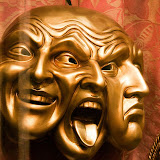
Nowhere is this more evident than in Milan’s Quadrilatero D’Oro (Golden Quad), the designer shopping district lined with flagship stores from all top designers. I’m no fashionista, but the sight of those windows one after the other made me want to go on a shopping spree. But I didn’t...way too expensive. Instead, I saved my splurging for something I regretted not getting on my first trip to Italy 10 years ago: a Venetian mask. The masks originally appeared in medieval times, a period of cultural and religious repression, and protected the wearer’s identity while engaging in decadent or promiscuous activities. Traditional Venetian masks are handmade with papier-mâché and when you see the real thing you have to marvel at the art and skill that went into them, very different from the ones made in China with resin or PVC. They’re things of beauty and I couldn’t resist getting one.

So this is definitely not going to be my last time in Italy as I still haven’t seen any place south of Rome: Naples & Pompeii, the Amalfi Coast, Sardinia, Sicily. In the meantime, I’ll keep in my memory one of the last images I saw on this trip, which in a way sums up perfectly what Italy is about: right in front of the main gate of the Duomo, two pigeons started to seriously make out (and if God really disapproved of sex, the two of them would have been fried by lightning for the audacity of making it in front of the cathedral!) while steps away three young models, skinny legs like stilts, were striking poses for a camera. Lust and fashion side by side…there couldn’t be a more representative picture of Italy.

Thursday, July 9, 2009

It's Not What You Think...

Slovenia
Let’s get it out of the way: Slovenia (formerly part of Yugoslavia) is not Slovakia (formerly attached to the Czech Republic) and is not Slavonia (now part of Croatia). I’ve been there: years ago, I met this lady who told me she was Slovenian…and I had this embarrassing realization that I had absolutely no idea where in Europe Slovenia was. Worse still, this was pre-Google days (God, I feel ancient!) and it took me a few days to sort Slovenia out.

Yugoslavia (literally “Land of the South Slavs”) was the idea for a single state for all South Slavic peoples and came into being after WWI. During WWII, Yugoslavia was occupied by Nazi and Fascist armies, and the communist Yugoslav Partisans, led by Marshal Tito, became a major resistance force. After the end of the war, Tito, regarded as a hero, was elected to lead the new independent communist state of Yugoslavia, which comprised six socialist republics (Bosnia and Herzegovina, Croatia, Macedonia, Montenegro, Serbia and Slovenia) and two autonomous provinces (Kosovo and Vojvodina), where all nations and nationalities were supposed to have equal rights. However, resentment over Serb hegemony within the federation led to ethnic tensions and after Tito’s death in 1980 and the fall of communism, nationalism grew, particularly in Slovenia and Croatia. On December 23, 1990, Slovenes overwhelmingly voted for independence, and on June 25, 1991, Slovenia pulled out of the Yugoslav Federation. Two days later, the Yugoslav army marched into Slovenia, but met strong resistance and threatened war. But unlike other republics, there were no minority issues (ie, there was no Serb minority in Slovenia), and on July 7, ten days after the beginning of the conflict, the Yugoslav government agreed to withdraw its troops from Slovenia within three months. Since its independence, Slovenia has been the most stable country of the former Yugoslav republics.

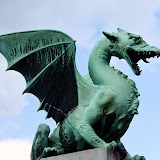
Slovenia is small, covering only 7.8 sq. mi (20 thousand sq. km). Its population is 2 million, and only 276,000 call the capital Ljubljana home. According to legend, the Greek prince Jason and the Argonauts (perfect name for a pop band) stole the golden fleece from King Aites and fled through seas and rivers until they reached the Ljubljanica River. Upon arriving, they were attacked by a dragon, but managed to slay it and founded Ljubljana. Nowhere in the city can you find any mention of or homage to Jason and the Argonauts, his bandmates…I mean, his companions, but the dragon, on the other hand, is immortalized on the city’s coat of arms and flag, on the Dragon Bridge and in numerous souvenir shops as a plush toy.

The city feels like a small town, and was the perfect place to kick back and relax after the overwhelming crowds in Venice. Ljubljana lacks major landmarks, but makes up for it with a rich cultural calendar during summer. When we arrived the Jazz Festival was on, as was the Ana Desetnica street theatre festival, in which artists from several countries (from Argentina to Australia) fill streets and squares with music, dance, mime, and circus acts. Some performances were basic, like juggling and fire eating, but others were more elaborate. My favorite was one in which a troupe (several of them on stilts) arrived on a white “ship” at Prešernov Trg, the main square, and at some point unrolled this gigantic tube; everyone was wondering what that was for and soon the answer came – it was for blowing out foam, which soon covered the audience, and turned the square into a sea of foam in which everyone was dancing and frolicking! That was a blast!

With only 28 miles (45 km), the Slovenian coast is very small, but there is an alternative: the subalpine Lake Bled, located about one hour from the capital. The lake sits among mountains and is one of the most popular destinations for Slovenes, where they ski in winter and sunbathe, swim or canoe in summer. It’s also very popular for weddings: besides the picture-perfect scenery, there’s a church on a small island in the middle of the lake. Wedding parties board a local boat called pletna and glide through the waters to the bottom of the church stairs. That surely beats arriving in a limo.

Beautiful though as Bled is, it’s not the #1 attraction in the country. That distinction goes to the Postojna Cave, the longest cave system in the country where so far 12 miles (20 km) of subterranean paths have been discovered. The caves are pretty impressive, with soaring chambers, massive stalagmites and stalactites, but I didn’t like much how the visit is organized: you board an open train that meanders through 2.5 miles (4 km) to the bowels of the cave (tall people have to watch out because some of the galleries are so low they could give you a few stitches on the head), then you are assigned to a group based on language, and herded through a 1-mile path (1.7 km). More fun should be one of the underground adventures for small groups (3-day advance booking required), which takes you to areas not open to the general public.

A visit to the cave can be combined with a stop at Predjama Castle, 5.5 miles (9 km) away. While the interior is bland, the setting is extraordinarily unique – the castle is perched on a cliff under a natural arch and seems to grow right out of the mountain. The castle was featured in Ghost Hunters International last year and the conclusion was that the castle is indeed haunted. I bet it’s the ghosts of Jason and the Argonauts, totally ticked off because, after all, it’s the Dragon that rocks.

Sunday, July 5, 2009

It Was Happiness And I Didn't Realize It

Venice is iconic. Even if you’ve never been there, you can picture gondolas gliding along countless canals, labyrinthine alleys flanked by pastel buildings, imposing palaces overlooking the Grand Canal, a diverse architecture that spans the Byzantine, the Gothic, the Renaissance and the Baroque, with varied elements such as arcades, balconies, covered bridges, columns, loggias. Venice inspires romance, even when originally there was nothing remotely romantic: many people, for instance, marvel at the Bridge of Sighs, imagining that the name was inspired by lovers’ sighs when, in reality, the bridge led to a prison and was so named because prisoners sighed on their way to the dungeons…Nowadays, the Bridge of Sighs will likely give rise to groans of disappointment as it is surrounded by Sisley billboards (one of the Benetton brands), so many that you wouldn’t notice the bridge if you didn’t know it was there. Sisley is contributing to renovations of the surrounding buildings, but still…did they need to put an ad right on top of the bridge?

Venice was historically an independent nation, and its history started in the 5th and 6th centuries as mainland inhabitants fled the barbarian invasions and sought refuge in the islands of the Venetian lagoon. Due to its strategic position, Venice became an important trade center between Western Europe and the rest of the world, and its involvement in the Crusades brought treasures plundered from Constantinople and extensive territories. By the end of the 13th century, Venice was the most prosperous city in Europe and its fleet of 3,300 ships dominated Mediterranean commerce. During this period, Venice’s leading families vied with each other to build the most sumptuous palaces and patronize the greatest artists.

Venice’s decline started in the 15th century with the loss of some of its territories to the increasingly powerful Turks, followed by the discovery of the Americas and a new sea trade route to India, which put an end to Venice’s route monopoly. After over 1,000 years, Venice lost its independence in 1797 when it was conquered by Napoleon. It then became part of the Austrian empire before it was finally annexed by the newly created Kingdom of Italy in 1866.

Venice encompasses 118 islands, 150 canals, 410 bridges, and is divided into six sestieri (districts): Cannaregio, Castello, San Marco, San Polo, Dorsoduro and Santa Croce, and these divisions are so ancient that the gondolas in the city have a metal piece in front with six notches pointing forward representing each sestiere. The main sestiere is San Marco, the location of Piazza San Marco, the Basilica di San Marco, the Doge’s Palace, and a number of museums and historical buildings. This is the most heavily touristed area in the city.

This was my second trip to Venice; I first came in November 1999, spending 3 days in cloudy and damp weather. We arrived in late afternoon when it was already getting dark, and after we settled in our hotel, we headed to Piazza San Marco, which we found eerily empty and dark. We went again the next morning, and found that there were more pigeons than people, some flying by so close that I thought they were kamikaze. We never saw the sun, and I kept thinking that I’d have to come back someday in summer to see the city in a different light.

So here I was again, this time in summer, and I instantly realized that worse than being swarmed by a bunch of kamikaze pigeons is being surrounded by legions of kamikaze tourists who move around without looking where they’re going and end up crashing into you. Plus, no pigeon would ever land smack in the middle of the scene you’re trying to photograph dressed head to toe in bright pink garb acting like it belongs there. Tourists were so numerous that they were even causing gondola jams…

What I’m describing is especially true in the San Marco sestiere. And though it’s great to admire the elaborately built, history-steeped Piazza, there were so many people that we felt suffocated, and decided we needed some breathing room; so we went for my favorite Venetian experience - getting lost. Venetian streets form a huge maze and you’ll inevitably get lost at some point, so make it to your advantage and grab the chance to go where most tourists don’t go. The best places to get lost in are the sestieri of Cannaregio, Castello and Dorsoduro, where much to our surprise, we could still find empty streets/canals even in summer.

A good day trip from Venice is to one or more of the neighboring islands. Most people head to Murano, famous for its glass. But I myself prefer Burano, a fishing town known for its lace and the quaintest village I’ve ever seen, with each house in a different pastel color. When we came in 1999, we seemed to be the only tourists on the island; we strolled for a couple hours barely seeing anyone else, and it felt like we had the whole place all to ourselves. Now, that was romantic! This time, a load of other people got off the ferry with us, and I thought it might be as crowded as San Marco, but fortunately I was wrong. Most tourists headed to the main street with its lace stores while we headed to the residential area, which this time was bursting in even more colors as almost every windowsill had flowers on it. Burano remains my favorite place in Venice, even more so now that I’ve discovered that the island still allows you to find a secluded place, even in the peak of summer.

I’ve met people who deem Venice the most beautiful city in the world, and I’ve met some who were not much impressed. Either way, no one can deny that there is no place like Venice, and this second time around, the city’s alleys and canals still enchant, retaining its timelessness despite having become essentially a tourist town. To me, the thing about Venice is that you need to feel transported to another era to be able to really appreciate the city, to be able to get your head around the work of centuries that made Venice what it is. I absolutely had it in 1999, in the quietude and coolness of late fall. It was harder this time amongst the hordes, but maybe that’s just another fascinating aspect of the city: once you get lost, that’s when you discover a Venice to call your own.
Friday, July 3, 2009

Ditch The High Heels

Cinque Terre is a group of five car-free villages that cover 11 miles (18 km) on the Italian coast between Genoa and Pisa, an area that was designated a Unesco World Heritage site in 1997 and became a national park in 1999. The villages cling to steep cliffs that plunge right into the sea and centuries ago, farmers built terraces supported by dry-stone walls on these slopes to cultivate vineyards. Nowadays, reduction in cultivated land is putting the area at risk because, if the hillsides are not worked, they become unstable and may just slide into the sea. Albeit less, wine production still goes on, and “Sciacchetrà”, a dessert wine, is perhaps the most famous. In local dialect, the name means “press it and forget about it for a long while” and it’s made by allowing the grapes to dry over a long period. This process eliminates much of the grape’s water and concentrates the sugar so this wine is known for it sweetness. And now I feel really proud because I almost sound like a wine connoisseur or someone who’s just swallowed a wine encyclopedia, but those who know me, know that I just can’t stand the taste of alcohol, especially that bitter aftertaste it leaves in your mouth. But Sciacchetrà is different: although the taste of alcohol is quite noticeable, it instantly disappears once you swallow it, leaving a sweet aftertaste, and that was just perfect for me.

All five villages in Cinque Terre are connected by Trail 2 (or Blue Trail) that runs along the coast from Riomaggiore to Monterosso, a trek that takes some 5 hours. You can also take the milk train (so called because it used to deliver milk and mail) that connects all villages. It’s worth getting the Cinque Terre card that includes train transport - it allows unlimited access to all trails and unlimited use of trains/vans. But very important: validate it on the yellow machine by the ticket window before you first use it, otherwise it’s a €50 fine.

The largest and easternmost village is Riomaggiore, also home of the main park office. This medieval village takes its name from Rivus Maior, the river that runs under the main road, and features typical buildings called “case torri” (tower houses), with three or four floors and no more than two rooms per floor. All villages have narrow alleys with countless slopes and steps, so an added benefit of such a Mediterranean vacation is that you also get in shape (provided you don’t collapse from exhaustion first). Even though we arrived without reservations, we lucked out and found an apartment with sea view. The view was stunning, but we had to negotiate 75 steps to get there…it may not sound much, but when you’re carrying a suitcase, it feels like the stairway to hell! So pack light; Cinque Terre is definitely one of the worst places to be if you have a large suitcase.

Right from the train station in Riomaggiore, you can take the Via Dell’Amore (Love Road), the most famous path in Cinque Terre, and one that gets so crowded that there are at times hiker jams. Only 0.6 miles (1 km) in length, it overlooks the sea and legend has it that the path got this name because lovers drew inspiration for their romantic declarations from the beauty of the promenade. I noted several cacti dotting the path and I’m sure that this has some deep philosophical meaning…maybe that the path of love is filled with thorns (am I cynical or what?). At one point on the promenade, there’s a little alcove with the symbol of Via Dell’Amore: a statue of two lovers facing each other. Around it there are several locks that couples place there to represent that their love is “locked” for eternity. I’m sure that it was a lock manufacturer who came up with this concept.

The Via Dell’Amore links Riomaggiore to Manarola, reputedly the town with the most vines. That’s probably true as the vineyards encircle the town and go almost all the way to the top of the hill, some 2,000 ft (600 m) above sea level. Billboards near the harbor show old photos of farmers carrying enormous baskets filled with grapes on their heads and, having almost collapsed carrying my suitcase up and down those slopes/steps, I can’t help but have the highest admiration for the willpower and resilience of those people carrying that weight down those hills every single day during harvest.

Manarola is probably the best town to be at sunset because the sun illuminates it head on. Go past Manarola and continue on as if you were heading for Corniglia; you can stop before the path makes a sharp turn to the right (after which the town comes out of sight) or, for even better views, take the path that runs above the official trail, one that leads to a small cemetery, where you’ll actually find some of the best views. Another path worth taking is the one along the vineyards.

Continuing northwest on the coast, the next village is Corniglia, the only one that sits on an elevation above the sea, reached by climbing 382 zigzagging steps. It sounds worse than it feels, and you actually get to the top before you know it. But if by the time you visit Corniglia, you’re already fed up with all the slopes and steps, just take the green van from the train station straight to the center of town. Corniglia has the lowest population of all five villages and sees less tourists. Although not as charming as Manarola or Vernazza, Corniglia has some of the best views of the region from the Santa Maria Terrace. You can also see all the other four villages from there.

Vernazza, the next village, is the most popular with tourists, perhaps because its main area is very close to the train station and you can get there without climbing any steps. Vernazza has the only natural harbor in the region, and was strategically important during the Republic of Genoa. For that reason, its buildings are more elaborate than those in the other villages and include features such as portals, porticos and arcades. Vernazza’s focal point is Piazza Marconi, a square adjacent to the harbor, filled with restaurant tables. Also by the square is a little beach with black sand, which though not very attractive, beats the pebble or boulder beaches in Riomaggiore, Manarola and Corniglia.

Finally, Monterosso, the resort town of Cinque Terre and the most accessible by car. Of all towns, it is the only one on flat land, has a good stretch of pebble beach, and boasts the best tourism infrastructure with the largest number of hotels. In fact, Monterosso is so developed that for some time during the late 40’s, it was excluded from the Cinque Terre trail because officials thought it was too large. In Monterosso, I saw something that I believed existed only in Fellini movies: women with high heels on the beach! Now I understand why there are signs along Cinque Terre trails pointing out that high heels are not suitable for hiking...

Thursday, July 2, 2009

God, Fashion and Stilettos On Testicles

Milan is the second largest city in Italy, renowned as one of the fashion and design capitals of the world. And you have to give it to the Milanese – they do know a lot about looking good. They are daring, and even though their experiments don’t always pay off (such as a man I saw with green glasses), when they get it right it’s distinctive and absolutely eye-catching. And since we’re talking about fashion, here’s a couple tips for the guys: try lavender shirts, which seems to be one of the colors of the moment; pastel enough not to shock your co-workers, but at the same time standing out in a sea of white and blue shirts. And what about your old blue shirts? Pair them with salmon pants and get out of the black/grey/navy rut. Trust me, it looks good.

The heart of the city is the Duomo, a gigantic Gothic cathedral sitting on a piazza with a size to match. God, in whose honor the cathedral was erected and who created the universe in six days (He sounds like a goal-oriented overachiever to me…and God knows I say that in the most positive way), must have pulled His hair out watching the construction of the Duomo: it took over five centuries to be completed. That’s not a typo…I did mean five centuries. Construction began in 1386 and is said to have ended in 1812, although some could argue that it actually ended much later because carving of the statues continued through the 19th century and the last gate was inaugurated in January 1965!

This was not the first time I visited the Duomo; I came in November 1999, and spent only one day in Milan. It was so foggy and I was so jetlagged that around 4 pm I was sitting on the steps in front of the cathedral, barely able to keep my eyes open. The only reason I didn’t fall asleep right there and then was that a handful of Hare Krishnas in bright yellow garb were clanging their bells and banging their drums right next to me and kept me awake. Krishna be with them for saving me from hitting the pavement.

It was a lot better this time. Maybe because it was a sunny summer day, or maybe because I took No-Jet-Lag tablets, I felt pretty good, and was able to have a better appreciation for the Duomo. The cathedral was designed to impress: it is 515 ft (157 m) long, 302 ft (92 m) high, its dome is 215 ft (65.5 m) high, and it can accommodate 40 thousand people. It houses 135 spires, over 3,200 statues (the largest collection in the world), and 146 stained-glass windows. Everything about the Duomo is grandiose, from its dimensions to its façade of Candoglia marble, from its numerous and elaborate carvings to its lengthy construction that required several innovations over time (e.g., how to transport and lift the huge stones). Inside, the Duomo is cavernous, gargantuan, but I found it too somber to be inspiring. Much more rewarding was the climb to the roof, allowing you to see up close the countless intricate spires and statues. When you see the Duomo from this point of view, you can almost forgive the constructors for such a botched workplan.

True to Milan’s fame as a shopping mecca, right next to the Duomo is the Galleria Vittorio Emanuelle II, completed in 1877 in honor of the first king of united Italy and reputedly the world’s oldest shopping mall. The galleria has a tragic story surrounding it: architect Giuseppe Mengoni, who designed it and worked on it for 12 years, died just weeks before completion when he fell from a scaffolding. Superstition has it that to avoid the same bad luck as Mengoni, all you need to do is to grind your heel into the testicles of the mosaic bull on the floor near the central cross. Well, actually there is a depression on the floor where the testicles would be, and you’re supposed to stick you heel in and make three 360˚ turns. Almost everybody who comes to the bull does that, including women in stilettos (now, that’s a skill!). And whoever came up with this idea to make everyone look like a spinning fool must be laughing in their grave to this day.

Italy is the country dell’amore, and you’ll find couples making out everywhere: in the subway, on the beach, in front of the Duomo, in restaurants, anyplace you can imagine. Some couples are cute, some should be dunked in a pool of ice, but the interesting thing is that some guys, while they are making out with their girlfriends, are also checking out other women around! Who said that men cannot multitask?

Curiosities: it was in Milan (at the time called Mediolanum – Middle of the Plain) that the Roman Emperor Constantine I (the first Christian Roman emperor) granted Christians freedom of worship in 313. It was also in Milan that Mussolini founded the Fascist Party in 1919.