Sunday, April 3, 2011
Joie D'Être Blasé
Ah, Paris! What more can be said about Paris? The most visited city on the planet is way on the beaten path, but it is there for a reason. Everyone knows of its romantic aura, its grand boulevards, its ubiquitous cafés, its exquisite cuisine, its impressive museums and monuments, its cranky residents. To be fair, Parisians look not so much cranky but rather afflicted by a chronic case of ennui. Maybe that happens when you live in one of the loveliest cities in the world (yawn!) but I can think of a suitable remedy: les Parisiens ennuiés should all be sent to Somalia. I bet l'ennui would vanish before they could scream "Au secours!"
Paris wasn't always so charming. Like many ancient cities, Paris grew without a plan and by the mid-19th century, it was a maze of narrow winding streets lined with wooden buildings where population density reached 250,000 people/sq. mile (100,000 per sq. km) and sewage went into gutters that ran down the middle of the street. It was said that you could smell Paris before you ever saw it. It was fertile ground for disease and a 6-month cholera epidemic in 1832 killed 20,000 people in the city. Changes were needed to relieve the over-population and hygiene issues.
It took an authoritarian government, that of Napoléon III, nephew of the famous Bonaparte, to actually get it done. In 1852, he commissioned Georges-Eugène Haussmann to modernize Paris and in less than 20 years, Haussmann completely transformed the city into what we see today - countless long straight, wide boulevards lined with cafés and shops, and open spaces. He did so with a heavy hand through a program of expropriations, razing and strict building regulations (for instance, floors in neighboring buildings had to have the same height, their façades main lines had to be the same). It's estimated that 60% of Paris buildings were impacted.
It is argued that the primary goal of the Paris redesign was not so much to improve living conditions but to more effectively police the capital. In a city long known for street revolutions, wide straight avenues would facilitate movement of military troops and hinder barricades. While this is likely true given that it came from a Napoléon, sanitation and social conditions did improve in the end. And nobody can deny that Paris turned out to be one of the most stunning cities in the world as a result. So was this a work of evil turned into a work of genius? Perhaps. But one thing we can say - if the main goal of the reshaping of Paris was to hamper protests, it was a miserable failure. To this day, protests and strikes are part of the French culture and happen with quite some frequency. In fact, the French are so fond of them that even their national soccer team went on strike during the World Cup 2010, a miscalculated move to say the least.
But strikes and protests were the last things on French minds this early spring. Not even the intervention in Libya, kicked off by the French, gave rise to one. And since I didn’t get the chance to experience a genuine French protest, I decided I should take to the other Parisian tradition – look blasé. So there I went strolling nonchalantly around with a 11-lb/5 kg rucksack (don’t ask…) trying to look as blasé as I could with that hunch on my back. Seven hours later I was so bent that I no longer needed the backpack to look like Quasimodo...I didn't look blasée, I looked blessée. So the following day I figured I should just do what the French do best...rien. Armed with a genuine French baguette (perhaps the only food in Paris that doesn't come in chipmunk portion), I joined dozens of locals sprawled through les jardins de Paris, and pretended to be as ennuiée as only a Parisian can be. And I felt so good doing it that maybe my next stop should be Somalia.

Sunday, March 27, 2011
Got My Eyes On You
I confess to my ignorance...I barely knew a thing about Malta except that it was a tiny island in the Mediterranean. And that wasn't quite right either. Malta is actually an archipelago covering only 122 sq. miles (316 sq. km) with a population around 400,000 people. The archipelago comprises two uninhabited islands (Cominotto and Filfla) and three inhabited ones - Malta (the largest and the administrative, cultural and commercial center of the country), Gozo (more rural) and Comino (with a permanent population of only 4 people but boatloads of daytrippers who come to the Blue Lagoon in high season).
Malta's history goes back 7,000 years, and due to its strategic position in the Mediterranean, many peoples had their eyes and hands on the islands - Phoenicians, Carthaginians, Romans, Byzantines, Arabs, Normans, Spaniards, and more recently, the French and the British. As a result, Malta is a cultural mélange but the group that most influenced the country were the Knights of Saint John. The Order had its origins in the Crusades as a hospital and guesthouse for poor pilgrims operated by monks in Jerusalem. As the Order grew, more hospitals were built along the pilgrimage route to Jerusalem, and knights who had been treated showed their gratitude by donating money and property to the Order.
When Islam conquered Jerusalem in 1291, the Order moved to Cyprus, then Rhodes from where they were again expelled by the Ottomans in 1523. Charles V of Spain then offered Malta to the Knights for a nominal rent of two falcons per year. They ruled until 1798 when Napoléon captured the island, and left a huge imprint that includes the capital Valletta and many of the buildings that exist in Malta today.
Religion is another major legacy of the Knights: roughly 95% of the population are Catholic, there are 365 churches on the archipelago (you're guaranteed a church nearby wherever and whenever you decide to sin in Malta!), and religion plays such a major role that to this day divorce does not exist in the country (a referendum is scheduled for May 28th to decide whether divorce passes into law though). Furthermore, the Maltese have religious celebrations unheard of in other parts of the world – March 19th is a public holiday in honor of St. Joseph, and the town of Rabat had a festival that was actually quite fun even for non-Catholics as dozens of people (including me) waged paper fights along the town streets.
Malta is a country filled with history and tradition, and it’s keen on preserving both. Although Valletta, the capital and crown jewel of the Knights’ era, is the focal point of any visit to Malta, several towns around the island offer a glimpse at life pre-Knights. Just outside Valletta, an area called The Three Cities (Vittoriosa, Senglea and Cospicua) where the Knights first made their home border the Grand Harbour and offer extensive views of Valletta. Just note that road signs refer to the towns as Birgu, Isla and Bormla, the ancient names…either the Maltese are really into tradition or this is their way of confusing potential new invaders.
Further out and back in time, Mdina, the old capital of Malta, has its origins traced back to 700 BC. The citadel has been wonderfully preserved behind its protective walls and nowadays is called the Silent City as traffic is limited and less than 400 people live in town. You can always find a little quiet corner in its narrow and shady streets. And if you really like going back in time, Malta is home to the oldest free standing structures in the world, megalithic temples built between 3600 and 2500 BC. The closest to the capital is the Hypogeum, an underground temple carved out of the rock. Prebooking is required and must be made some three weeks in advance – I tried to book 2.5 weeks in advance and it was sold out!
But Malta’s past is not only seen in its ancient towns and temples – it’s also found in the country's means of transport. Traditional Maltese boats are still used by fishermen today and also take tourists on short cruises along the Grand Harbour. They are painted in bright blue, yellow and red with the Eyes of Osiris on their bows to ward off evil spirits, a symbol thought to have been brought by the Phoenicians. The best place in Malta to see these little boats is Marsaxlokk. And last but not least, the Maltese bus, an attraction in its own right. Whenever you take a public bus in Malta, you’ll likely end up in a 1950s vehicle that will rattle all your bones out of their sockets. It's a quintessential Maltese experience but you wonder what will fall apart first - you or the bus...
Sunday, February 6, 2011
Till The Cows Get A Tan
 |
| St Lucia pics |
St Lucia has a double personality. It was only colonized after 1660 when the French signed a treaty with the local Carib people, and then it changed hands no less than 14 times between France and Britain over the following 150 years. The result is that nowadays St. Lucians have English as their official language but speak Creole (a French dialect) at home, drive on the left hand side of the road and live in towns with French names. All with a distinct Caribbean flavo(u)r.
And distinct St Lucia is. Unlike many of the other Caribbean islands that are mostly flat, the island’s volcanic origin gave rise to mountains, hills, valleys, a dense rain forest that feeds on the fertile volcanic soil, and the so-called world’s only drive-in volcano. The latter is actually a tourist trap - the “drive-in volcano” is nothing more than sulphur springs with boiling mud, with not even the hint of a crater in sight. Save yourself time and money and don’t go there. Stick to the beaches, the rainforest, and the Piton peaks (the Gros Piton and Petit Piton mountains, the landmarks of St Lucia).
The island is still not overly touristy – last year, it received 330,000 visitors, a mere 1.4% of the 23 million who visited the Caribbean in 2010. Touted as a wedding/honeymoon destination, St Lucia has more to offer than romantic elopement and resorts with sun loungers by the water. I actually view St Lucia more as an activity than a beach destination - besides the usual water sports, there’s also hiking, mountain-biking, zip-lining, horseback riding and you can also climb both Pitons. But if you feel like me, are tired of shoveling snow and want no more than do absolutely nothing, just laze away on the sand till the cows get a tan. Don’t know what I mean? Then check the photos on the link above.
Tuesday, December 14, 2010
Zen And The Art Of Microwaving Martians
 |
| Kyoto pics |
A 20-hour flight to the other side of the globe feels like a trip to another planet. If the destination happens to be Japan, then you’ll really feel that you’re on another planet. You may even think that everything is fine, that you’ll manage to get to your hotel without running into something that looks out of this world…until you must face a Japanese ticket machine with more buttons than an airplane cockpit – it’s a visual assault and in your jet-legged state, you get dizzy just trying to find the “English” button which, truth be told, may not exist (survival tip: look at the maze-like chart above the machine, find the fare to your destination, throw the money in and press the button with the fare amount you want). That’s just one example of the cultural shock that is Japan and Kyoto is no exception - Kyoto station, the entry point to the city, is a gigantic 16-storey building that houses not only the train station, but also a 500-room hotel, a theater, two malls, a bus station, a museum and several restaurants. A labyrinthine black hole that you doubt you’ll ever get out of.
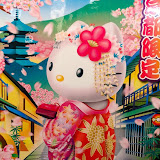
Kyoto is arguably the Japanese city that most retains the country’s traditions and I was surprised to see many young women wearing kimonos. For the life of me, I cannot imagine any woman wanting to walk around in wooden flip-flops in a dress so tight that barely lets her walk but they must wonder the same about western feet-mangling stilettos. Kimonos are not the biggest thing in Kyoto, though; green tea is. Japanese meals are served with a cup of green tea and there are several other variants such as green tea latte, green tea smoothie, green tea ice cream, green tea cream puff, chocolate sweets wrapped in green tea flour. I overdosed on green tea and already looked as green as a Martian by the second day.
Kyoto was the capital of Japan for over a thousand years from the 8th to the 19th century. Called Heian-kyō, or Capital of Peace and Tranquility, the town lived up to its name for four centuries and became Japan’s commercial and cultural center. But in the 10th century, the samurai, warriors who fought for the emperor against the tribes of northern Japan, started to form private armies and the ensuing fragmentation of power led to civil wars and internal conflicts. From the late 12th century, the country was ruled by a succession of shōgunates (military dictatorships), with Kyoto remaining the official capital but without any political power.
Kyoto was not bombed in WWII and is therefore the only big city in Japan that retains a large number of pre-war buildings. Among those are Kyoto’s 1600 temples and 400 Shintō shrines that are the city’s main attractions. Their design is meant to give a feeling of peace and tranquility in a setting that usually includes Zen gardens, ponds and paths through hills or groves. It would have been very relaxing if the whole population of Japan hadn’t decided to join me. November is Momiji-gari season (autumn leaf viewing) in Kyoto and no matter which temple or what time of day, there were always throngs of shutter-happy Japanese leaf-peepers of every possible age, and sometimes it took me a very, very, very long time to take a single picture. At times it was very frustrating, but other times I stood there so long that I even stopped thinking; and in a strange way, the temples did what they were supposed to do – they quieted my mind.
The city was spared in WWII, but one of its traditions suffered greatly – that of the geisha. The word translates as “person of the arts” and earliest geisha were actually men dedicated to dance, music and poetry. The female version of the geisha took hold in the 1760s/1770s and like the men, they were artists and erudite companions. During WWII, most women had to work for Japan, and geisha numbers dwindled dramatically – while there were over 80,000 in the 1920s, it is estimated that there are less than 2,000 today. Furthermore, prostitutes began calling themselves “geisha girls” to occupying soldiers, leading to the misconception by many Westerners that geisha is just the Japanese word for prostitute.
Nowadays, the geisha tradition still exists in the Gion district of Kyoto. They perform in exclusive teahouses and restaurants, and only for select wealthy customers – the fee for an evening of entertainment is upwards of $1000. It is impossible to enter a teahouse and spend the evening with geisha without being introduced by an established patron, but geisha performances can be seen at annual festivals or cultural presentations such as the daily ones at Gion Corner.
While a true geisha performance is out of reach for most tourists, there is a modern experience that is as Japanese as they come and very accessible – sleep in a capsule hotel. I was a bit concerned that it might feel like a coffin, but I wouldn’t pass up this quintessential Japanese experience. The pod turned out to feel more like a microwave, it was reasonably comfortable and included a “sleeping ambient system” that dims the lights as you go to sleep and brightens then up gradually as you awake. And as I woke up to brighter and brighter lights, I was actually waiting for my little microwave to beep, signaling that I was well done. The shower hours were also a huge novelty – to 25 a.m. on weekdays and 26 a.m. on weekends. Fantastic! Only the Japanese to miniaturize the day and squeeze more hours into it!
Jokes aside, Japan is a fascinating land, and Kyoto even more so – a sprawling maze where the futuristic and the ancient sometimes blend, sometimes clash, a place that will intrigue you, astound you, that will overwhelm you with its quirkiness but captivate you with its details. And, surprisingly, one that will let you find peace and tranquility amid all the hum.
Thursday, December 9, 2010
War Games With Lil' Kim
 |
| S.Korea pics |
“…confronted each other hostilely much like southern and northern halves of a partitioned nation”. This could very well have been written about contemporary North and South Korea, but it was actually penned in the early 8th century about the kingdoms of Shilla and Parhae that occupied the Korean peninsula, and were separated by a wall that ran from present-day Pyongyang, the capital of North Korea, in the west to the Sea of Japan in the east. Fast forward to the 21st century, and history repeats itself – the same peninsula cut in half by a Demilitarized Zone or DMZ.
The origins of the DMZ date back to WWII: it was a line drawn at the 38th parallel of Japanese-occupied Korea to mark the areas in which American and Soviet forces would receive Japanese surrender. The US viewed an occupation of Korea as crucial to the postwar stabilization of the Pacific, and set up a three-year military government below the 38th parallel while the Soviets did the same above it. By 1948, two separate republics existed and in mid-1950, the North invaded the South, igniting the Korean War. Three years and two million+ lost lives later, an armistice was reached that restored the old border and created the DMZ, a 2.5-mile wide buffer zone between the two Koreas, nowadays the most heavily militarized border in the world (the irony won’t be lost on anyone) and a major tourist attraction. It should be noted though that a formal peace treaty was never signed.
On the northern side of the DMZ is North Korea, the most isolated country in the world with less than 2,000 Western visitors per year, and where mobile phones and the internet are non-existent. The country is highly militarized, with a minimum 6-year military service for men, and ruled with an iron fist by the Kim dynasty with a vast propaganda machine that promotes a personality cult of the “Supreme Leader”, currently Kim Jong-il, or Lil’ Kim, as I call him. His official biography claims that his birth was foretold by a swallow and marked by the appearance of a double rainbow and a new star in the sky! No wonder Lil’ Kim’s ego is larger than a communist square. And like any other megalomaniac dictator, Lil’ Kim wants perennial power, thus the brinkmanship and nuclearization of the country.
Incidents between the two Koreas are nothing new, but the November 23rd attack on an insignificant South Korean island of some 1,300 inhabitants was one of the most serious recently. And it was not the first this year - in March, North Korea also sank a South Korean naval ship killing 46 soldiers. Many South Koreans think this is enough and support retaliation. The battle of words has started - the new South Korean defense minister said his country will respond with airstrikes if North Korea attacks again and joint US-South Korea military drills took place last week; North Korea warns that these drills could lead to an “all-out war any time”. The stage is set for escalation of hostilities…and one can only hope that Lil’ Kim is not as deranged as he seems to be.
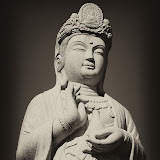
The now divided Korean peninsula was first unified in 668 under the Shilla kingdom with its capital located in Gyeong-ju in the southeastern part of the country. The kingdom had close relations with the Tang dynasty in China and the heavy Chinese influence/alliance lasts to this day and can be seen from religion (Buddhism) to philosophy/ethics (Confucianism) to architecture and trade (China is South Korea’s largest trading partner). Korean historical buildings mirror many that exist in China and tend to follow the same style so unless you’re a history buff, there’s no need to visit lots of them. My favorite was Changdeok Palace in Seoul, not only because it looks recently restored but also because it is one of the largest and doesn’t feel crowded. Morning is the best time to visit as bus tours only hit the palace in the afternoon.
Less palace hopping means that you can do more of what planeloads of Japanese come to Seoul for – shopping. Options abound, including malls that operate from 10:20 am to 5:30 am (!), providing enough hours of retail therapy to cure any emotional malaise. Just don’t forget to bring earplugs lest nonstop insufferable Korean pop music drive you to mass murder. And fear not if you cannot spend hours in a mall – sellers also bring their wares (and voice amplifiers) into subway cars so you can do your shopping while you commute. This is what I call being productive!
But more bizarre than mobile merchants hawking their merchandise inside subway cars was what happened to me on the last day of the trip. On the spur of the moment I decided to visit Bongeunsa Temple in Seoul and as I was admiring the Buddhas, I suddenly bumped into Jónsi, singer of the Icelandic band Sigur Rós, who has spent most of this year touring with one of the best shows I’ve seen recently. The odds of a NY dweller running into an Icelander musician in an Asian city of 10.4 million people are virtually zero so here’s my question - why can’t I be as lucky with lottery numbers?!
Wednesday, July 21, 2010
Eternal Daylight Of My True Paradise
 |
| Iceland Summer Pics |
Under ordinary circumstances, I’d never go to the same country twice in the same year. But there’s nothing ordinary about Iceland. I knew I’d be back one day…I just didn’t know it’d be so soon. All I can say is this - Iceland is full of surprises, and just like it sneaked into my travel plans earlier this year, it created perfect conditions for a summer trip.
When I left Iceland on March 28th, a small eruption on Fimmvörđuháls was sending cute white plumes up to the skies. It stopped on April 12th, and two days later on April 14th, Eyjafjallajökull decided to show the world what fire and ice can do. Many of my friends told me how lucky I was to have gotten out of Iceland before that, but it’s all a question of perspective: I actually felt very unlucky. And with every blast of ash it blew up in the air, I could picture little Eyjafjallajökull sneering at me with a “See what you’re missing?” Oh, how I wanted to strangle that unspeakable volcano!
Eyjafjallajökull did more than bring air travel to a halt and leave millions stranded; it made some people think that the whole country was blanketed in ash, causing a drop in the number of visitors. Lower demand equal lower prices, and if on one hand my little friend denied me its grand spectacle, it opened the door for my summer return.
Summer in Iceland is relative, though: with temperatures below 60˚F (15˚C), it is colder than winter in my hometown of Rio de Janeiro. When I still lived in Rio, I caught a headline once that named Iceland the country with the highest quality of life in the world, and I remember laughing because I found it unfathomable that a place that would feel like a refrigerator to me could offer any quality of life. But that is the beauty of travel: you learn to see things differently, and Iceland turned out to be like nothing I had envisioned.
Iceland has been called the “land that defies imagining” (National Geographic), the “land where nature always gets the last word” (The Geography of Bliss), a “magical epic land” (Lonely Planet). Iceland is all this, but no matter how much you read about it or how many photos you see, Iceland cannot really be described or depicted, it can only be experienced. No words or pictures will ever be able to capture a place that is fierce yet delicate, compact but seemingly vast, grand in a subtle way.
To me, Iceland is simply the most awe-inspiring country I have ever seen. Iceland is a work in progress, a place that breathes, heaves, gets transformed before your eyes (for instance, the country gained a new mountain in between my visits). Iceland is an experiment of nature, and all this changing and reshaping is contagious: Icelanders have a “let’s try it” attitude, and experiment with sounds, design, art, and can sometimes create truly unique and intriguing things.
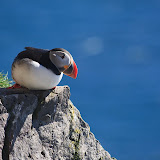
And now that I’m back to my “normal” life, I miss Iceland a lot. I miss the endless daylight, the choir of countless birds at sunny midnights, the clean air, the sun that doesn’t burn, the clear streams that reflect the color of the sky. I miss the red traffic lights in Akureyri, almost all of them heart-shaped to remind people to “smile with your heart”. I miss being able to see for miles wherever I look. I miss getting sprayed by waterfalls, watching the weather change numerous times a day, getting awestruck by the scenery at almost every turn. But most of all, I miss a place that gives me the feeling that there are several open roads, both physical and metaphorical, ahead of me to be explored, a place that lifts the spirit, and makes me feel simply extraordinary.
Saturday, July 10, 2010
Is Paradise Really There?
 |
| Bahamas Pics |
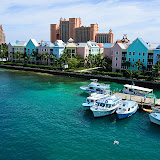
The Bahamas comprises 29 islands, 661 cays and 2,387 islets, but its most well known piece of real estate is Paradise Island, home to the mega-resort Atlantis. What many don’t know is that the isle was once called Hog Island and used mostly for farming until it was purchased in 1960 by Huntington Hartford, the A&P supermarket heir, who gave the island its current name.
Paradise Island is only 4 miles (6.4 km) long and 0.5 miles (0.8 km) wide, and is dominated by Atlantis, the sprawling resort that is the most expensive place to stay in the Bahamas, occupies 97 acres, offers 2300 rooms in three different towers, and contains 20 million gallons of lagoons, pools, waterfalls and aquariums. Talk about gigantic.
But mammoth though as Atlantis is, I soon realized that something was missing, and it wasn’t an erupting volcano – it was character. Tourism accounts for about 50% of the Bahamian GDP, and of the two million plus tourists who come to New Providence Island every year (where Nassau, Cable Beach and Paradise Island are located), 85% come from the US. It shows…Atlantis feels a lot like a tropical Vegas, and I had to remind myself every now and then that I was in the Bahamas, not in the US.
Paradise to me is a place that inspires wonder, lifts the spirit, leaves you elated. While Paradise Island is an ingenious, well-executed endeavor that offers the ultimate in comfort, it feels so contrived, so artificial that it becomes faceless. Paradise Island didn’t make a memorable impression on me precisely because it tries too hard to be grand, and therefore fails to create a connection.
This is not to say that Paradise Island shouldn’t be visited. There are enough pools, slides, activities to give anyone hours of fun and thrills. So if you’re looking for a quick 3 or 4-day tropical escape near the US that won’t require a lot of planning, by all means, come to Paradise Island. But look elsewhere if you want authenticity. That I fortunately found in my June destination, a place of extraordinary character and charm. It is coming up next.
Subscribe to:
Posts (Atom)